
Ever wonder what religion actually is and why some people... Mostrar más
 Religious Education3 visualizaciones·Actualizado May 9, 2026·6 páginas
Understanding Religion: Exploring Beliefs and Definitions
1 / 6
1
of 6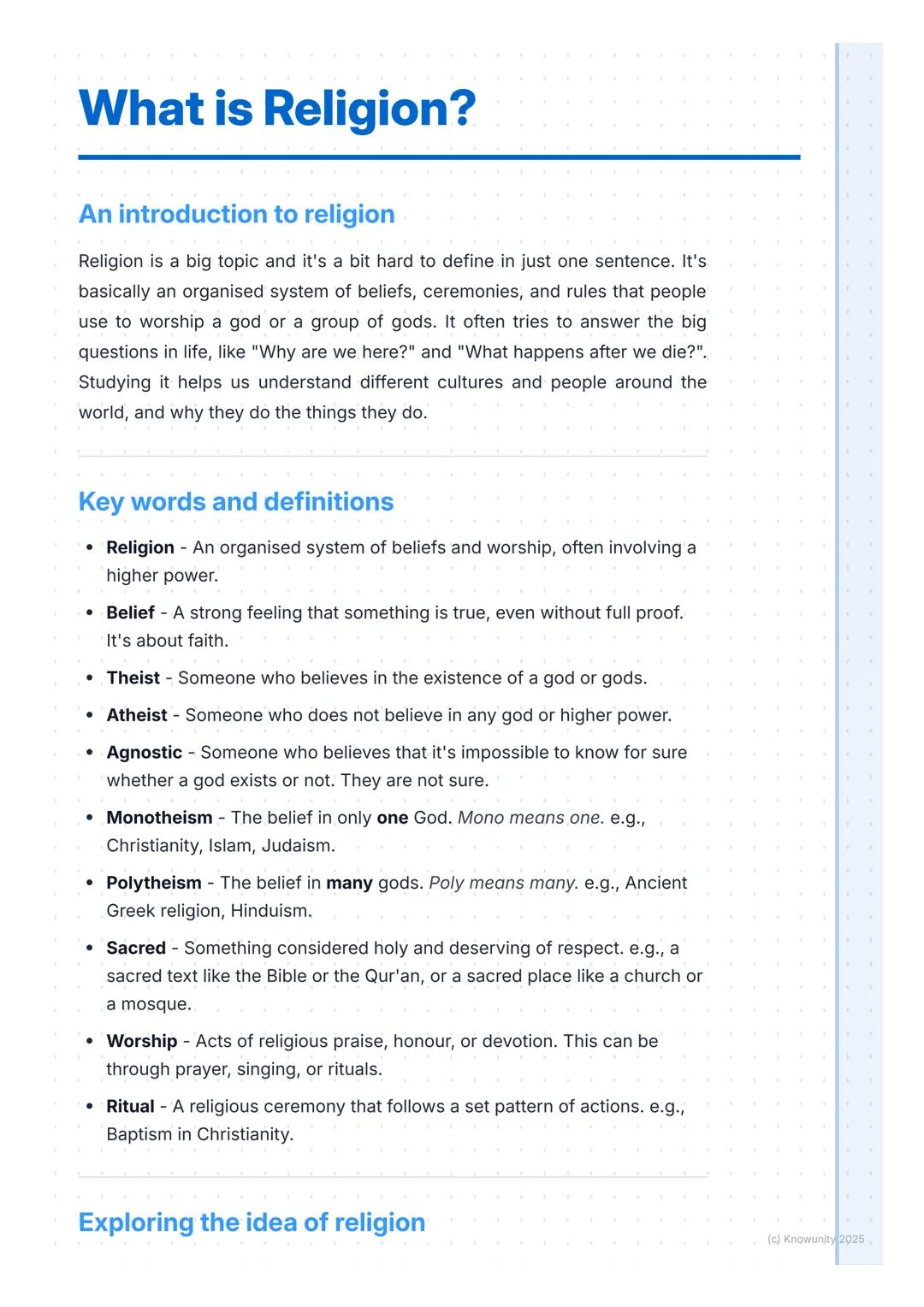
What is Religion?
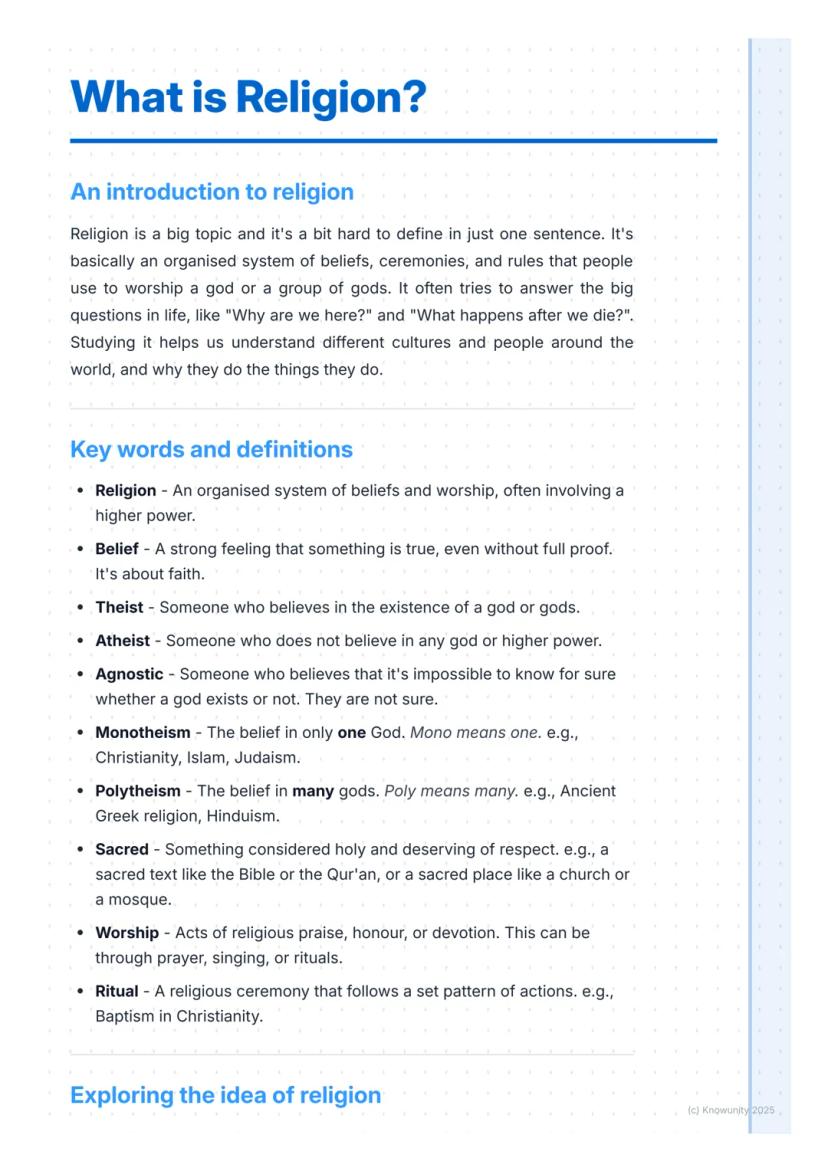
Think of religion as a complete package that includes beliefs, rules, and special ceremonies all rolled into one. It's how people try to answer life's biggest questions like "Why are we here?" and "What happens when we die?"
There are loads of important terms you need to know for your exam. A theist believes in God, whilst an atheist doesn't believe in any god at all. An agnostic sits on the fence - they think it's impossible to know for sure whether God exists.
You'll also need to understand monotheism (believing in just one God, like Christianity or Islam) and polytheism (believing in many gods, like ancient Greek religion). Sacred things are considered holy and special, like the Bible or a mosque. Worship includes all the ways people show respect to their god through prayer, singing, or rituals like baptism.
Remember: Don't mix up atheist and agnostic - atheists definitely don't believe in God, whilst agnostics just aren't sure either way!
2
of 6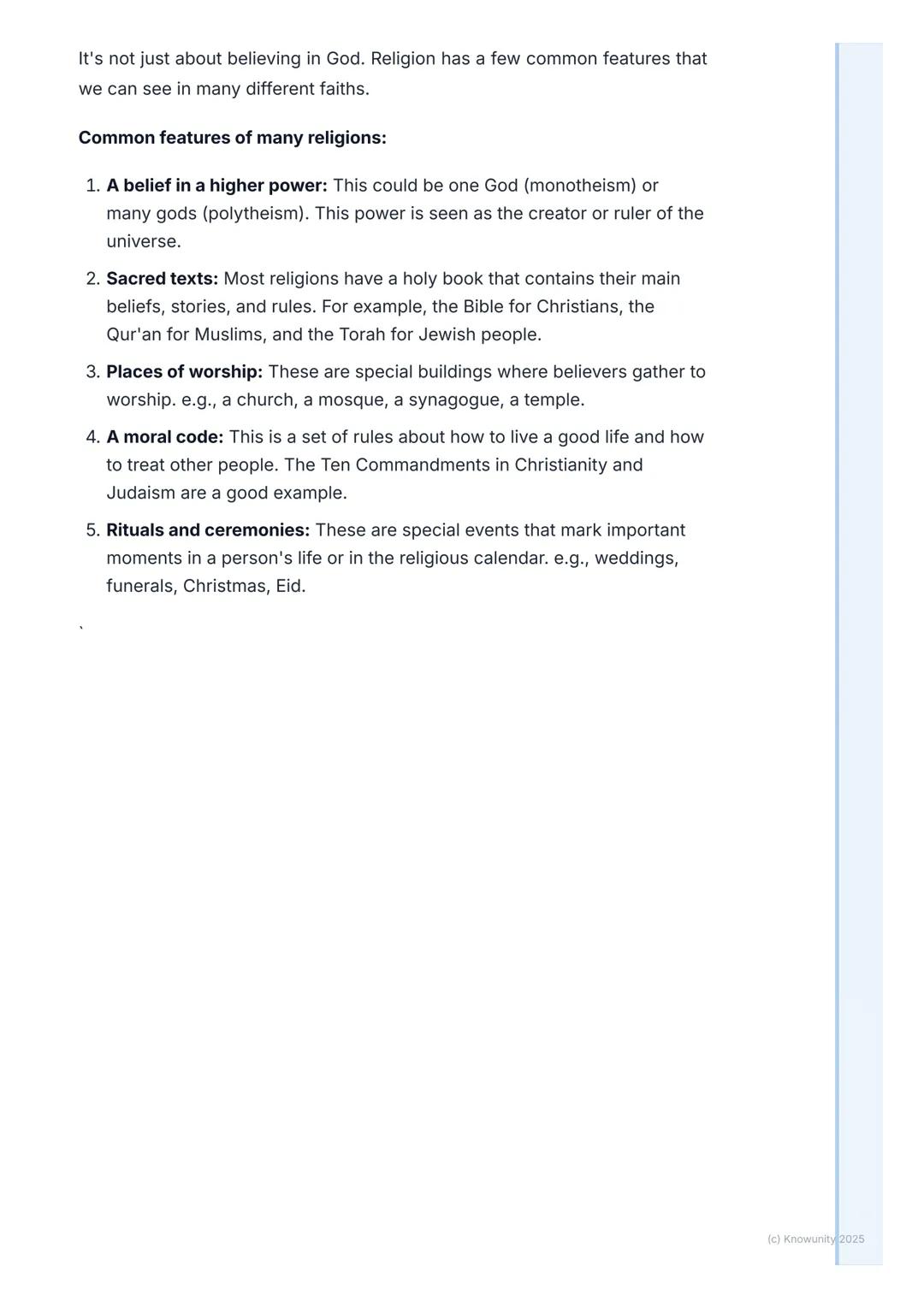
Common Features of Religion
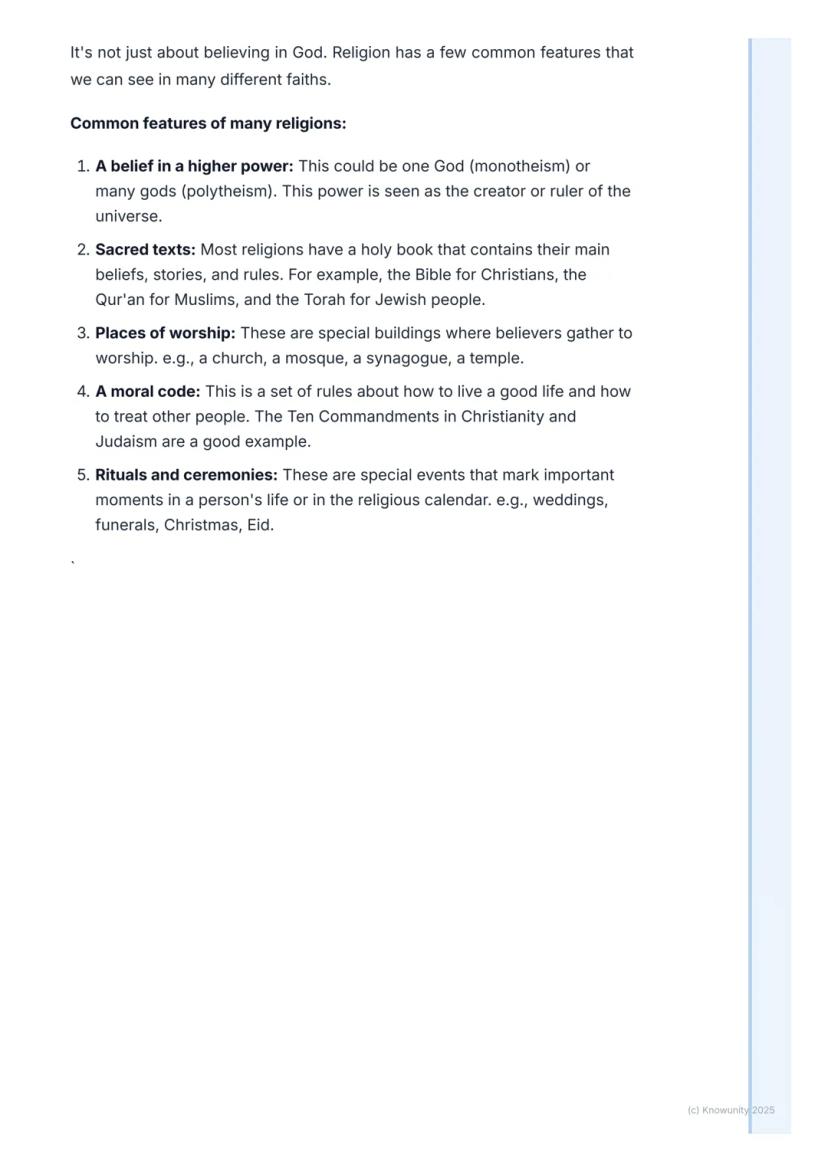
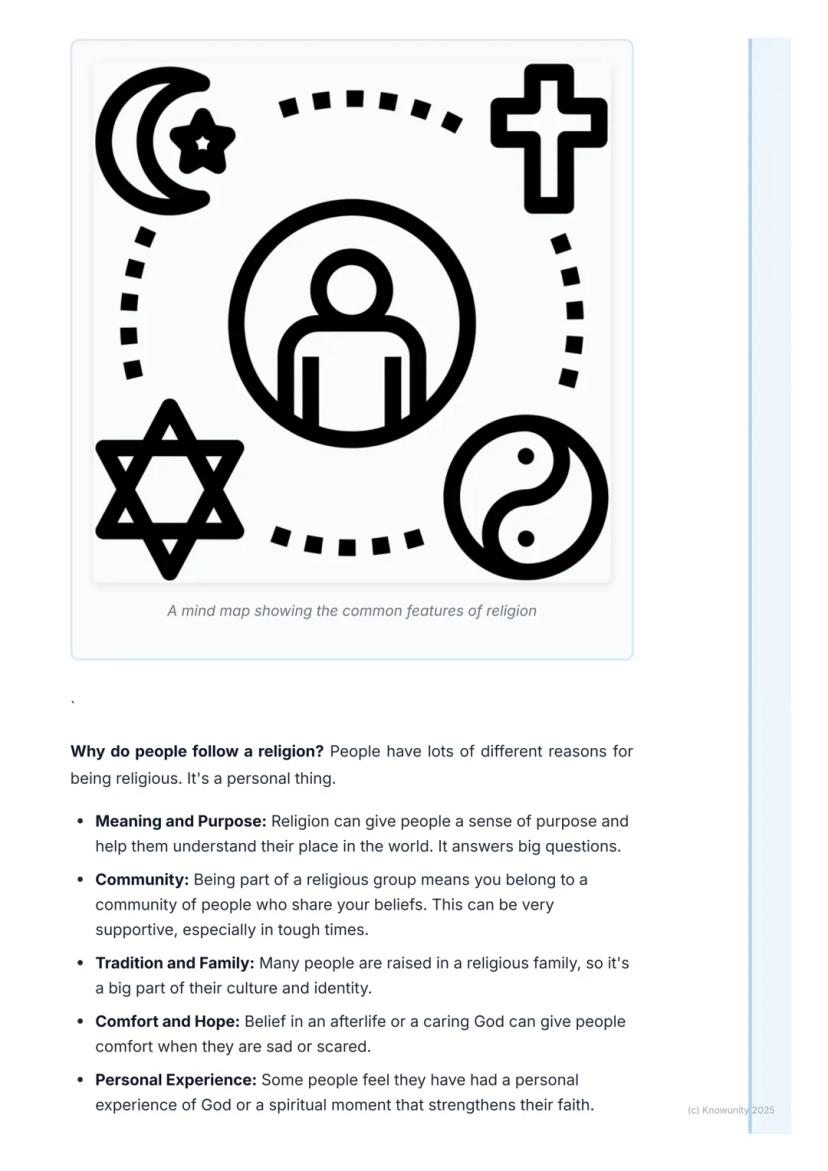
Most religions share five key features that you'll spot again and again. First, there's always a belief in a higher power - whether that's one God in monotheism or multiple gods in polytheism.
Sacred texts are another biggie - these holy books contain the main beliefs and rules for each religion. Think the Bible for Christians, the Qur'an for Muslims, or the Torah for Jewish people.
Every religion has special places of worship where believers gather, like churches, mosques, synagogues, or temples. They also follow a moral code - basically a set of rules about how to live a good life and treat others properly. The Ten Commandments are a perfect example of this.
Finally, rituals and ceremonies mark important moments in people's lives or the religious calendar. These could be weddings, funerals, Christmas, or Eid - events that follow set patterns and have special meaning.
Top tip: Try to use examples from different religions in your exam answers, not just Christianity - it shows you've been paying attention!
3
of 6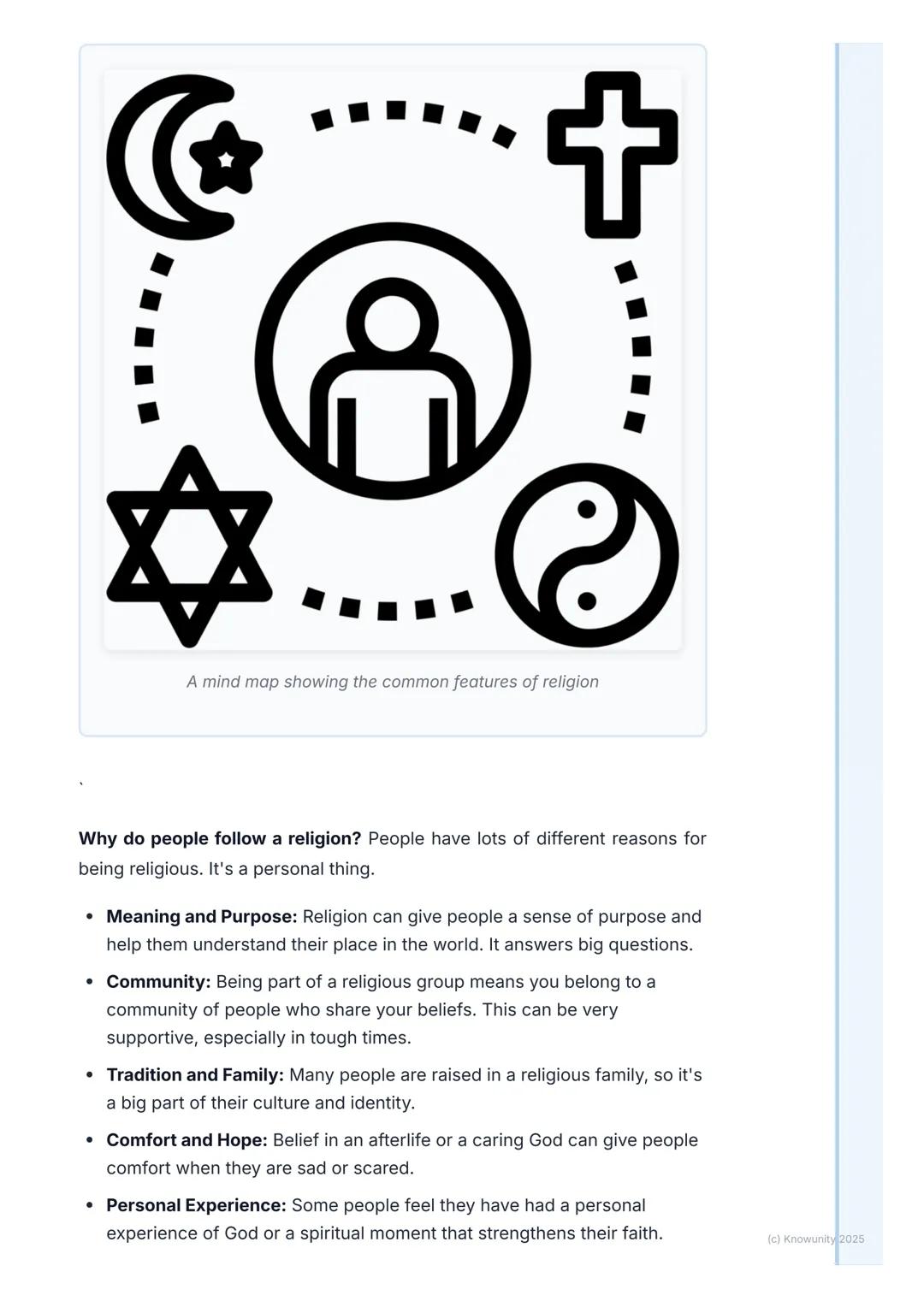
Why People Choose Religion
People have loads of different personal reasons for being religious, and understanding these helps you see why religion matters to so many people.
Meaning and purpose is massive - religion gives people answers to life's big questions and helps them understand their place in the world. Many people also love the community aspect - being part of a religious group means belonging to a supportive network of people who share your beliefs.
Tradition and family play a huge role too. Loads of people grow up in religious families, so faith becomes part of their identity and culture. Religion also offers comfort and hope, especially during tough times - believing in an afterlife or a caring God can be really reassuring when you're scared or sad.
Some people also have personal experiences that strengthen their faith - maybe they feel they've had a spiritual moment or experienced God in some way. These personal encounters can be incredibly powerful and life-changing.
Key insight: Religion isn't just about rules and rituals - it's often about finding belonging, comfort, and meaning in life.
4
of 6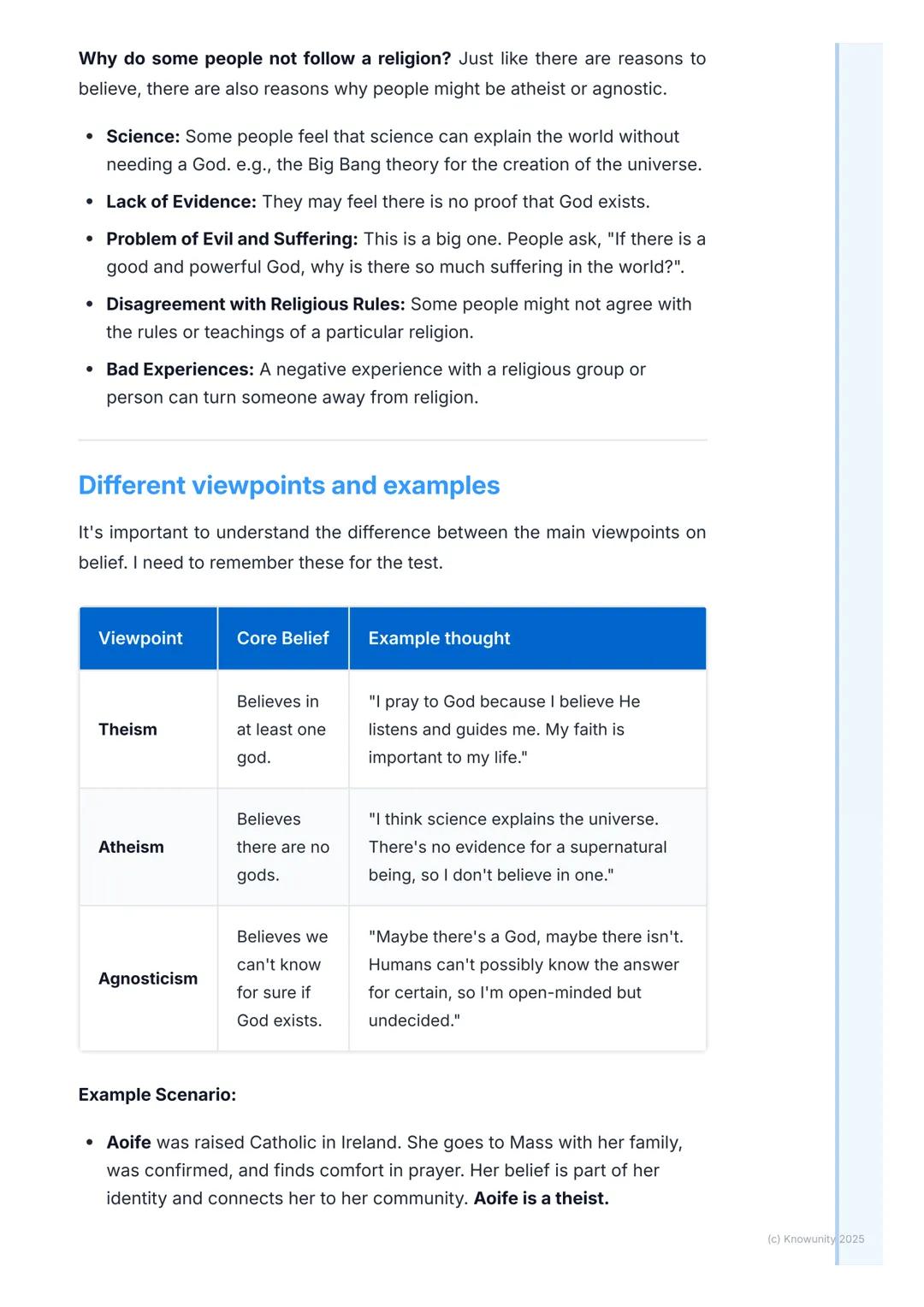
Why Some People Don't Follow Religion
Just like there are reasons to believe, there are solid reasons why people might be atheist or agnostic. Science is a big factor - some people reckon scientific theories like the Big Bang can explain everything without needing God.
The lack of evidence bothers many non-believers - they want proof that God exists before they'll believe. The problem of evil and suffering is another massive issue. People ask: "If there's a good and powerful God, why is there so much pain and suffering in the world?"
Some people simply disagree with religious rules or don't like the teachings of particular religions. Bad experiences with religious groups or people can also put someone off religion completely.
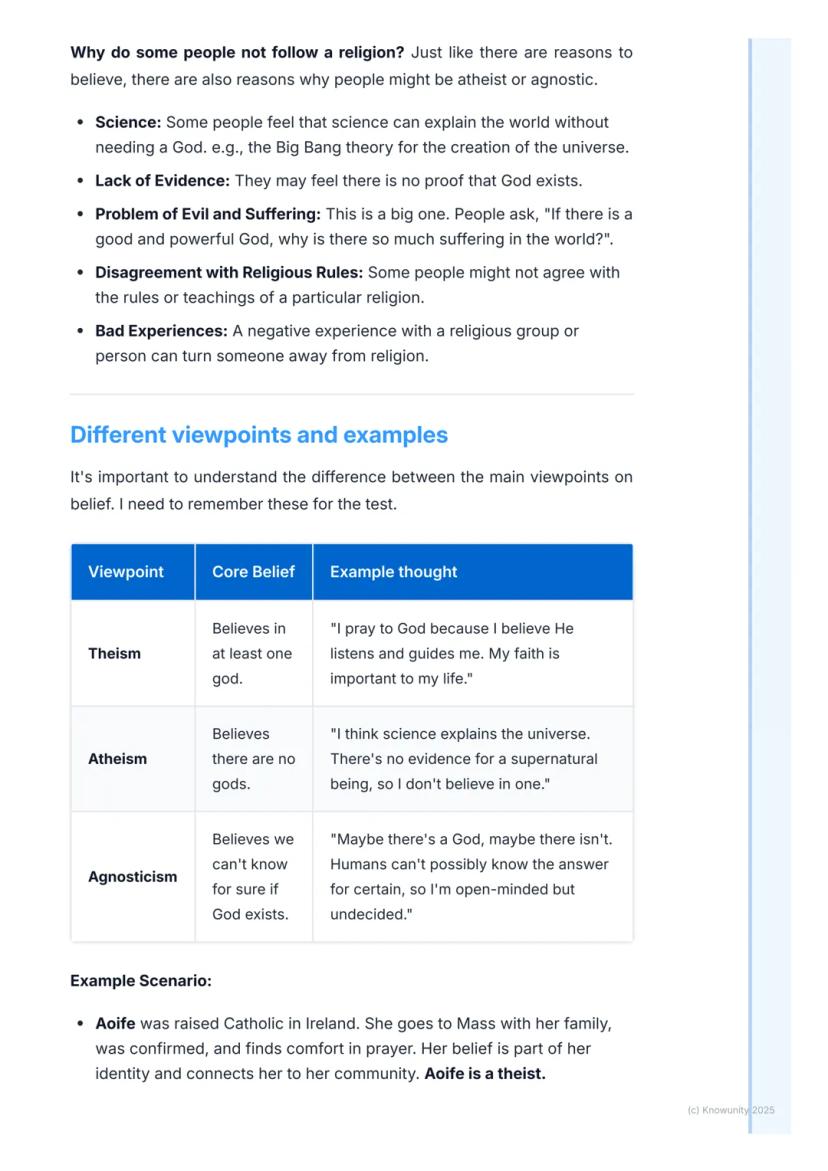
You need to know the three main viewpoints for your exam. Theists believe in God or gods. Atheists definitely don't believe in any god or higher power. Agnostics think it's impossible to know whether God exists - they're genuinely unsure and admit they just don't know.
Exam alert: This difference between atheist and agnostic is a common exam question - make sure you've got it sorted!
5
of 6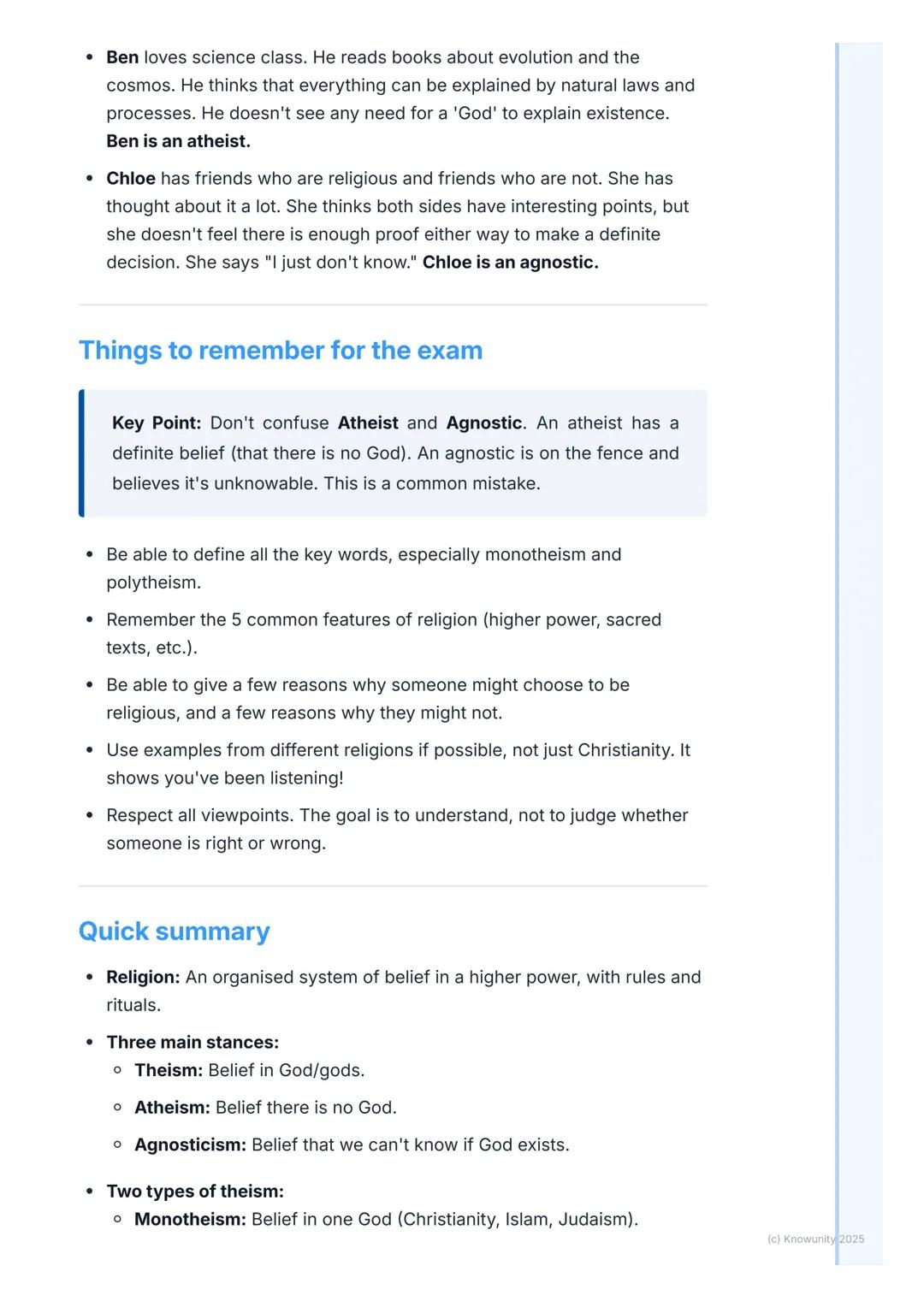
Understanding Different Viewpoints
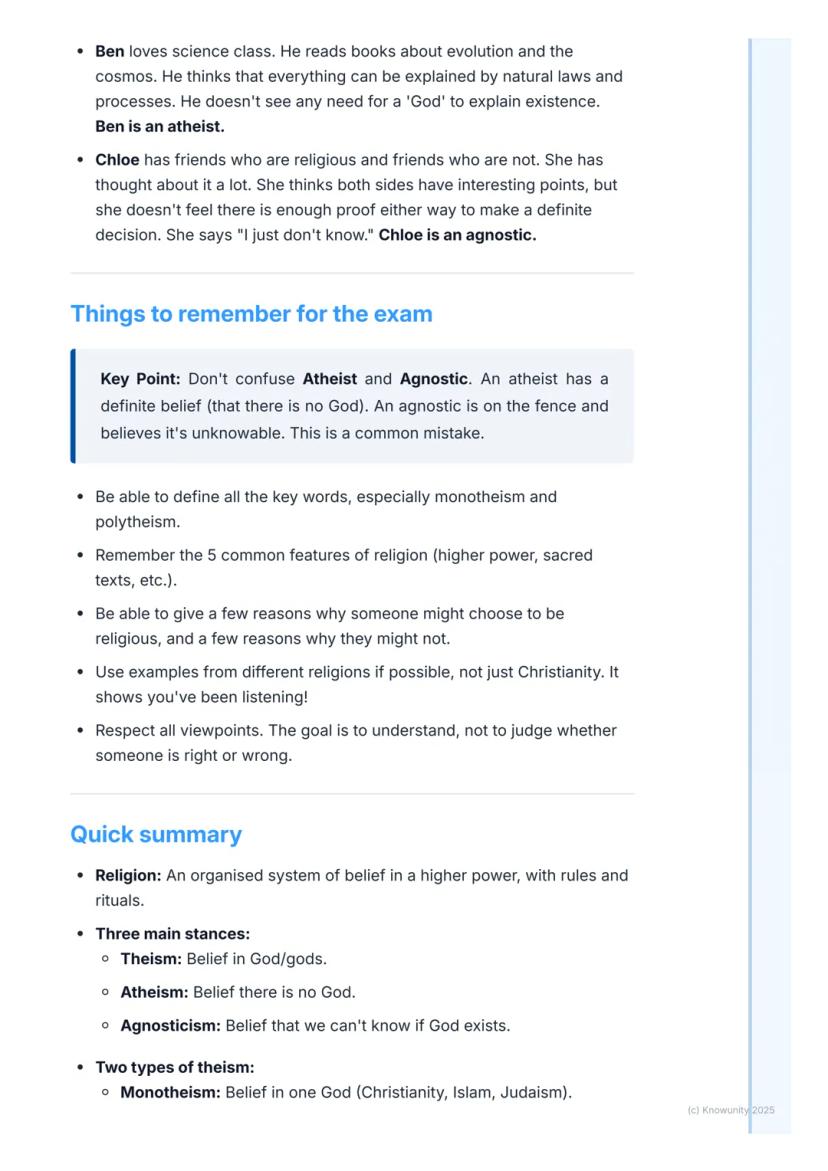
Let's look at some examples to make these viewpoints clearer. Ben loves science and reads about evolution and space - he thinks natural laws explain everything without needing God. Ben's an atheist because he's made a definite decision that there's no God.
Chloe has religious and non-religious friends and has thought loads about both sides. She finds interesting points on both sides but doesn't think there's enough proof either way to make a firm decision. Chloe's agnostic because she genuinely doesn't know.
For your exam, remember these key points. Monotheism means one God (like Christianity, Islam, Judaism), whilst polytheism means many gods (like Hinduism). Know the five common features of religion and be able to give reasons why people choose religion or reject it.
Most importantly, always show respect for all viewpoints in your answers. The goal is understanding different perspectives, not judging who's right or wrong. Use examples from various religions when possible - it demonstrates proper engagement with the topic.
Success tip: Practice defining all the key terms clearly and simply - they're guaranteed to come up in some form on your exam!
6
of 6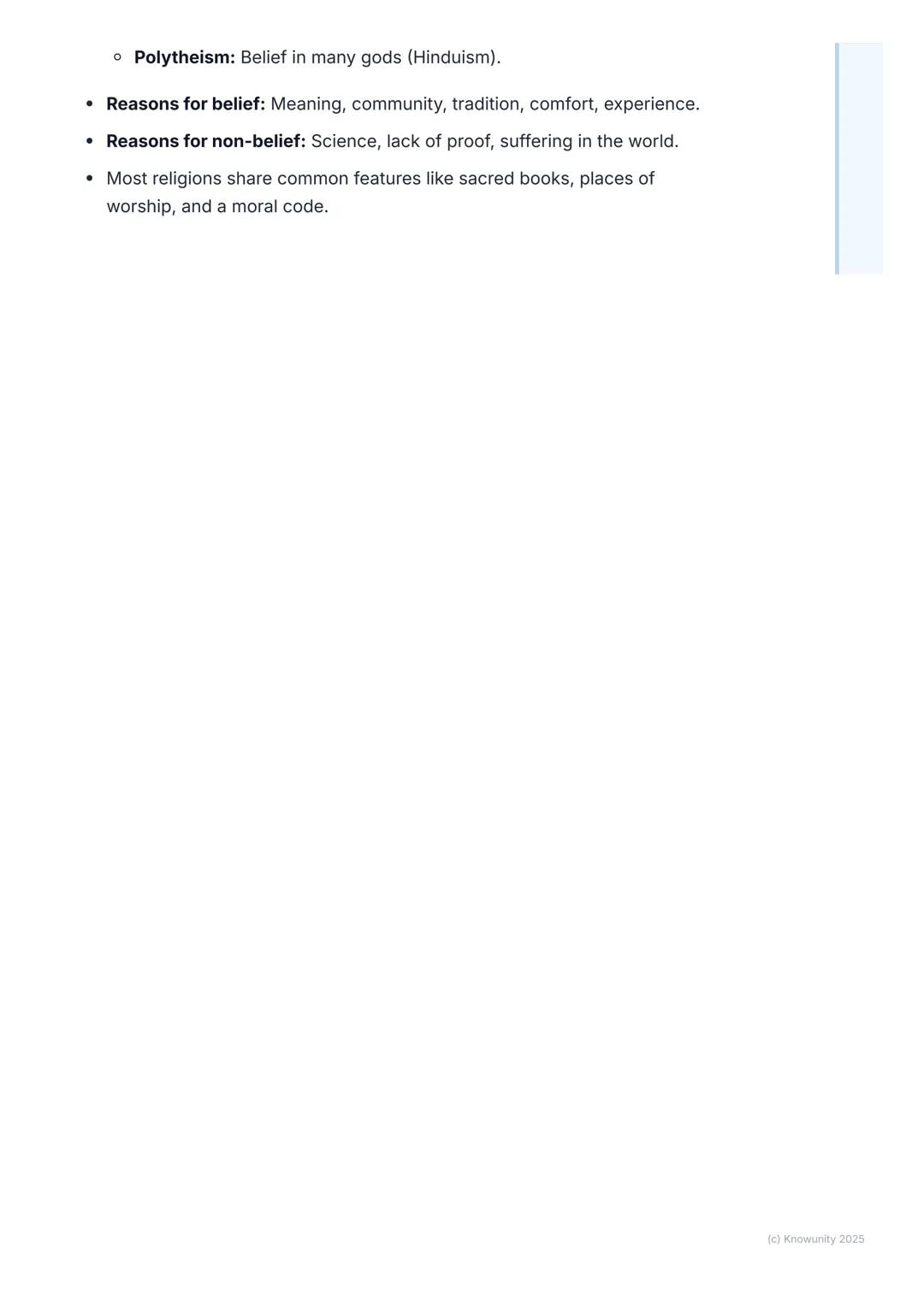
Quick Revision Summary
Here's everything wrapped up for easy revision. Religion is an organised system of believing in a higher power, complete with rules and rituals that guide people's lives.
The three main stances are theism (believing in God or gods), atheism (believing there's no God), and agnosticism (believing we can't know if God exists). Within theism, you've got monotheism (one God) and polytheism (many gods).
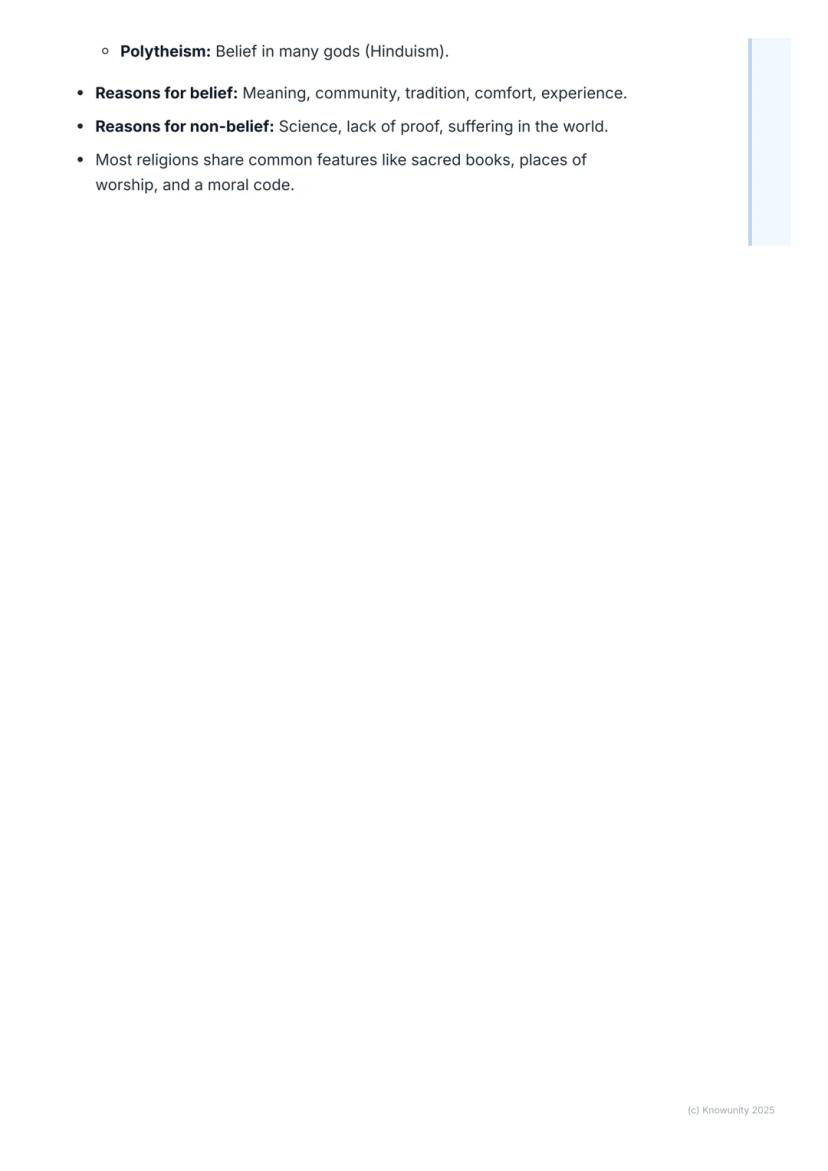
People choose religion for meaning, community, tradition, comfort, and personal experiences. People reject religion because of science, lack of evidence, the problem of suffering, disagreement with rules, or bad experiences. Most religions share common features like sacred books, places of worship, moral codes, beliefs in higher powers, and special rituals.
Remember to respect all viewpoints and use examples from different religions in your exam answers. This topic is all about understanding why people believe what they believe, not deciding who's right!
Final reminder: Focus on understanding and explaining different perspectives clearly - that's what gets you top marks in religious studies!
Pensamos que nunca lo preguntarías...
¿Qué es Knowunity AI companion?
Nuestro compañero de IA está específicamente adaptado a las necesidades de los estudiantes. Basándonos en los millones de contenidos que tenemos en la plataforma, podemos dar a los estudiantes respuestas realmente significativas y relevantes. Pero no se trata solo de respuestas, el compañero también guía a los estudiantes a través de sus retos de aprendizaje diarios, con planes de aprendizaje personalizados, cuestionarios o contenidos en el chat y una personalización del 100% basada en las habilidades y el desarrollo de los estudiantes.
¿Dónde puedo descargar la app Knowunity?
Puedes descargar la app en Google Play Store y Apple App Store.
¿Knowunity es totalmente gratuito?
Sí, tienes acceso gratuito a los contenidos de la aplicación y a nuestro compañero de IA. Para desbloquear determinadas funciones de la aplicación, puedes adquirir Knowunity Pro.
Contenidos más populares
9 Irish
IrishIrish oral questions and answers
Questions and answers for the leaving cert oral
5th Year4254
IrishIrish oral questions
Outline of oral questions
5th Year2055
IrishGaeilge Grammar Office
All the basics you need to know on Irish grammar.
6th Year893
 English
Key Quotes : Sive
Key Quotes and explanations: Sive
6th Year2211
IrishAn Gaeilge Aiste
Irish Language essay
6th Year1250
IrishIrish poetry 2027
Iníon + Dínit an Bhróin
5th Year1133
IrishMé Féin & Mo Chlann (Myself & My Family)
Students will learn vocabulary to describe themselves, their family members, and daily routines. This helps in personal introductions and discussions.
TY291
IrishLC HL notes- Iníon (poem)
Includes poem in English and Irish, theme, key words & phrases
5th Year2284
 Geography
Territory, economic activities in Paris basin
essay
6th Year80
¿No encuentras lo que buscas? Explora otros temas.
Mira lo que dicen nuestros usuarios. Les encanta - y a tí también.
4.6/5App Store
4.7/5Google Play
La app es muy fácil de usar y está muy bien diseñada. Hasta ahora he encontrado todo lo que estaba buscando y he podido aprender mucho de las presentaciones. Definitivamente utilizaré la aplicación para un examen de clase. Y, por supuesto, también me sirve mucho de inspiración.
Pablousuario de iOS
Esta app es realmente genial. Hay tantos apuntes de clase y ayuda [...]. Tengo problemas con matemáticas, por ejemplo, y la aplicación tiene muchas opciones de ayuda. Gracias a Knowunity, he mejorado en mates. Se la recomiendo a todo el mundo.
Elenausuaria de Android
Vaya, estoy realmente sorprendida. Acabo de probar la app porque la he visto anunciada muchas veces y me he quedado absolutamente alucinada. Esta app es LA AYUDA que quieres para el insti y, sobre todo, ofrece muchísimas cosas, como ejercicios y hojas informativas, que a mí personalmente me han sido MUY útiles.
Anausuaria de iOS
Religious Education3 visualizaciones·Actualizado May 9, 2026·6 páginasUnderstanding Religion: Exploring Beliefs and Definitions
Ever wonder what religion actually is and why some people believe whilst others don't? Religion is basically an organised system of beliefs, ceremonies, and rules that people use to worship a god or gods. Understanding religion helps you make sense... Mostrar más
1
of 6Inscríbete para ver los apuntes. ¡Es gratis!
- Acceso a todos los documentos
- Mejora tus notas
- Únete a millones de estudiantes
What is Religion?
Think of religion as a complete package that includes beliefs, rules, and special ceremonies all rolled into one. It's how people try to answer life's biggest questions like "Why are we here?" and "What happens when we die?"
There are loads of important terms you need to know for your exam. A theist believes in God, whilst an atheist doesn't believe in any god at all. An agnostic sits on the fence - they think it's impossible to know for sure whether God exists.
You'll also need to understand monotheism (believing in just one God, like Christianity or Islam) and polytheism (believing in many gods, like ancient Greek religion). Sacred things are considered holy and special, like the Bible or a mosque. Worship includes all the ways people show respect to their god through prayer, singing, or rituals like baptism.
Remember: Don't mix up atheist and agnostic - atheists definitely don't believe in God, whilst agnostics just aren't sure either way!
2
of 6Inscríbete para ver los apuntes. ¡Es gratis!
- Acceso a todos los documentos
- Mejora tus notas
- Únete a millones de estudiantes
Common Features of Religion
Most religions share five key features that you'll spot again and again. First, there's always a belief in a higher power - whether that's one God in monotheism or multiple gods in polytheism.
Sacred texts are another biggie - these holy books contain the main beliefs and rules for each religion. Think the Bible for Christians, the Qur'an for Muslims, or the Torah for Jewish people.
Every religion has special places of worship where believers gather, like churches, mosques, synagogues, or temples. They also follow a moral code - basically a set of rules about how to live a good life and treat others properly. The Ten Commandments are a perfect example of this.
Finally, rituals and ceremonies mark important moments in people's lives or the religious calendar. These could be weddings, funerals, Christmas, or Eid - events that follow set patterns and have special meaning.
Top tip: Try to use examples from different religions in your exam answers, not just Christianity - it shows you've been paying attention!
3
of 6Inscríbete para ver los apuntes. ¡Es gratis!
- Acceso a todos los documentos
- Mejora tus notas
- Únete a millones de estudiantes
Why People Choose Religion
People have loads of different personal reasons for being religious, and understanding these helps you see why religion matters to so many people.
Meaning and purpose is massive - religion gives people answers to life's big questions and helps them understand their place in the world. Many people also love the community aspect - being part of a religious group means belonging to a supportive network of people who share your beliefs.
Tradition and family play a huge role too. Loads of people grow up in religious families, so faith becomes part of their identity and culture. Religion also offers comfort and hope, especially during tough times - believing in an afterlife or a caring God can be really reassuring when you're scared or sad.
Some people also have personal experiences that strengthen their faith - maybe they feel they've had a spiritual moment or experienced God in some way. These personal encounters can be incredibly powerful and life-changing.
Key insight: Religion isn't just about rules and rituals - it's often about finding belonging, comfort, and meaning in life.
4
of 6Inscríbete para ver los apuntes. ¡Es gratis!
- Acceso a todos los documentos
- Mejora tus notas
- Únete a millones de estudiantes
Why Some People Don't Follow Religion
Just like there are reasons to believe, there are solid reasons why people might be atheist or agnostic. Science is a big factor - some people reckon scientific theories like the Big Bang can explain everything without needing God.
The lack of evidence bothers many non-believers - they want proof that God exists before they'll believe. The problem of evil and suffering is another massive issue. People ask: "If there's a good and powerful God, why is there so much pain and suffering in the world?"
Some people simply disagree with religious rules or don't like the teachings of particular religions. Bad experiences with religious groups or people can also put someone off religion completely.
You need to know the three main viewpoints for your exam. Theists believe in God or gods. Atheists definitely don't believe in any god or higher power. Agnostics think it's impossible to know whether God exists - they're genuinely unsure and admit they just don't know.
Exam alert: This difference between atheist and agnostic is a common exam question - make sure you've got it sorted!
5
of 6Inscríbete para ver los apuntes. ¡Es gratis!
- Acceso a todos los documentos
- Mejora tus notas
- Únete a millones de estudiantes
Understanding Different Viewpoints
Let's look at some examples to make these viewpoints clearer. Ben loves science and reads about evolution and space - he thinks natural laws explain everything without needing God. Ben's an atheist because he's made a definite decision that there's no God.
Chloe has religious and non-religious friends and has thought loads about both sides. She finds interesting points on both sides but doesn't think there's enough proof either way to make a firm decision. Chloe's agnostic because she genuinely doesn't know.
For your exam, remember these key points. Monotheism means one God (like Christianity, Islam, Judaism), whilst polytheism means many gods (like Hinduism). Know the five common features of religion and be able to give reasons why people choose religion or reject it.
Most importantly, always show respect for all viewpoints in your answers. The goal is understanding different perspectives, not judging who's right or wrong. Use examples from various religions when possible - it demonstrates proper engagement with the topic.
Success tip: Practice defining all the key terms clearly and simply - they're guaranteed to come up in some form on your exam!
6
of 6Inscríbete para ver los apuntes. ¡Es gratis!
- Acceso a todos los documentos
- Mejora tus notas
- Únete a millones de estudiantes
Quick Revision Summary
Here's everything wrapped up for easy revision. Religion is an organised system of believing in a higher power, complete with rules and rituals that guide people's lives.
The three main stances are theism (believing in God or gods), atheism (believing there's no God), and agnosticism (believing we can't know if God exists). Within theism, you've got monotheism (one God) and polytheism (many gods).
People choose religion for meaning, community, tradition, comfort, and personal experiences. People reject religion because of science, lack of evidence, the problem of suffering, disagreement with rules, or bad experiences. Most religions share common features like sacred books, places of worship, moral codes, beliefs in higher powers, and special rituals.
Remember to respect all viewpoints and use examples from different religions in your exam answers. This topic is all about understanding why people believe what they believe, not deciding who's right!
Final reminder: Focus on understanding and explaining different perspectives clearly - that's what gets you top marks in religious studies!
Pensamos que nunca lo preguntarías...
¿Qué es Knowunity AI companion?
Nuestro compañero de IA está específicamente adaptado a las necesidades de los estudiantes. Basándonos en los millones de contenidos que tenemos en la plataforma, podemos dar a los estudiantes respuestas realmente significativas y relevantes. Pero no se trata solo de respuestas, el compañero también guía a los estudiantes a través de sus retos de aprendizaje diarios, con planes de aprendizaje personalizados, cuestionarios o contenidos en el chat y una personalización del 100% basada en las habilidades y el desarrollo de los estudiantes.
¿Dónde puedo descargar la app Knowunity?
Puedes descargar la app en Google Play Store y Apple App Store.
¿Knowunity es totalmente gratuito?
Sí, tienes acceso gratuito a los contenidos de la aplicación y a nuestro compañero de IA. Para desbloquear determinadas funciones de la aplicación, puedes adquirir Knowunity Pro.
Contenidos más populares
9IrishIrish oral questions and answers
Questions and answers for the leaving cert oral
5th Year4254
IrishIrish oral questions
Outline of oral questions
5th Year2055
IrishGaeilge Grammar Office
All the basics you need to know on Irish grammar.
6th Year893
EnglishKey Quotes : Sive
Key Quotes and explanations: Sive
6th Year2211
IrishAn Gaeilge Aiste
Irish Language essay
6th Year1250
IrishIrish poetry 2027
Iníon + Dínit an Bhróin
5th Year1133
IrishMé Féin & Mo Chlann (Myself & My Family)
Students will learn vocabulary to describe themselves, their family members, and daily routines. This helps in personal introductions and discussions.
TY291
IrishLC HL notes- Iníon (poem)
Includes poem in English and Irish, theme, key words & phrases
5th Year2284
GeographyTerritory, economic activities in Paris basin
essay
6th Year80
¿No encuentras lo que buscas? Explora otros temas.
Mira lo que dicen nuestros usuarios. Les encanta - y a tí también.
4.6/5App Store
4.7/5Google Play
La app es muy fácil de usar y está muy bien diseñada. Hasta ahora he encontrado todo lo que estaba buscando y he podido aprender mucho de las presentaciones. Definitivamente utilizaré la aplicación para un examen de clase. Y, por supuesto, también me sirve mucho de inspiración.
Pablousuario de iOS
Esta app es realmente genial. Hay tantos apuntes de clase y ayuda [...]. Tengo problemas con matemáticas, por ejemplo, y la aplicación tiene muchas opciones de ayuda. Gracias a Knowunity, he mejorado en mates. Se la recomiendo a todo el mundo.
Elenausuaria de Android
Vaya, estoy realmente sorprendida. Acabo de probar la app porque la he visto anunciada muchas veces y me he quedado absolutamente alucinada. Esta app es LA AYUDA que quieres para el insti y, sobre todo, ofrece muchísimas cosas, como ejercicios y hojas informativas, que a mí personalmente me han sido MUY útiles.
Anausuaria de iOS