
Ever wondered if that shocking news story on TikTok is...
 Politics & Society1 visualizaciones·Actualizado Jun 14, 2026·6 páginas
Understanding Media Literacy: Identifying Bias and Evaluating Facts
1 / 6
1
of 6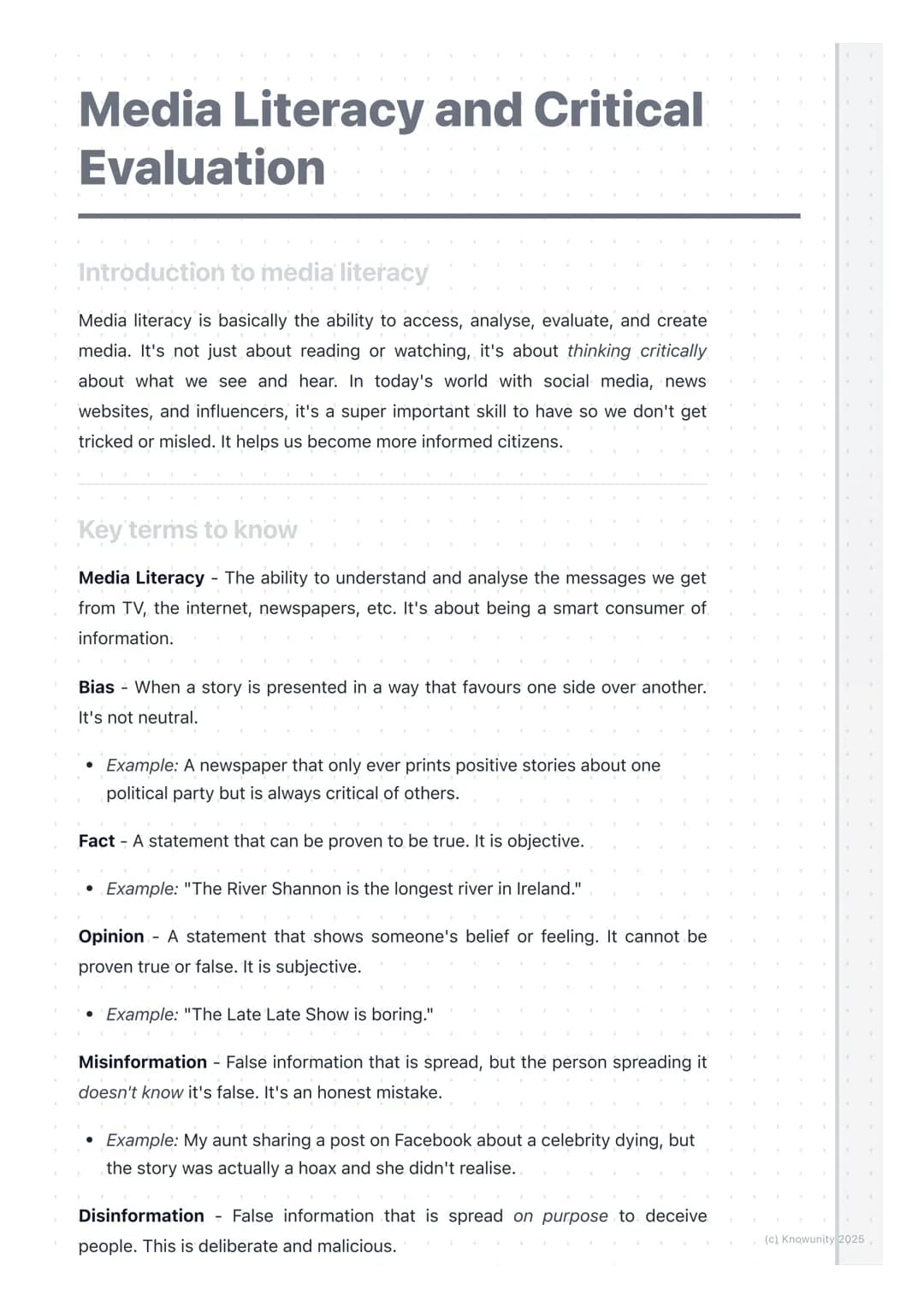
Understanding Media Literacy Basics
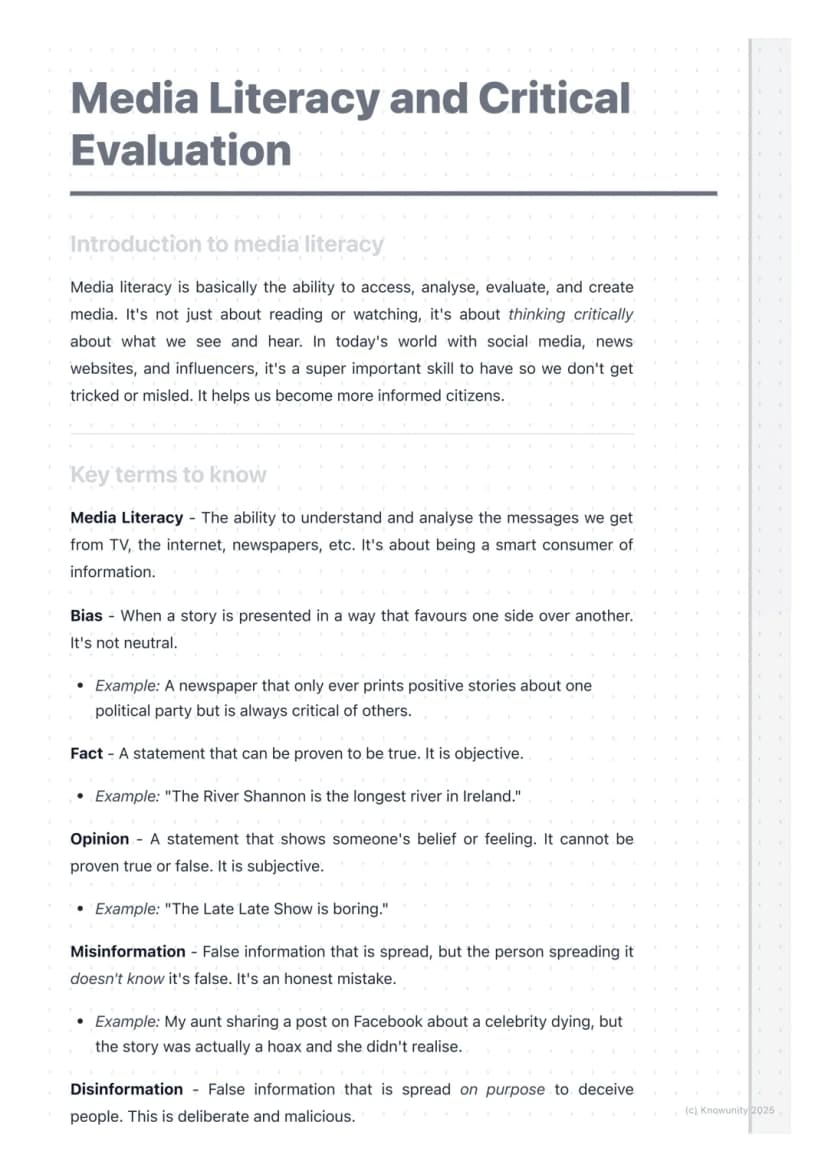
Think of media literacy as your mental toolkit for dealing with everything from Instagram posts to news articles. It's not just about consuming content—it's about analysing and evaluating what you're seeing. With influencers, news websites, and social media constantly bombarding us with information, this skill is absolutely crucial for avoiding being misled.
The key is learning to distinguish between different types of information. A fact is something you can actually prove true, like "The River Shannon is Ireland's longest river." An opinion, on the other hand, is someone's personal belief or feeling that can't be proven right or wrong—like saying "The Late Late Show is boring."
Understanding bias is equally important. This happens when a story clearly favours one side over another instead of staying neutral. You'll spot this when a newspaper only prints positive stories about one political party whilst constantly criticising others.
Remember: Being media literate doesn't mean being paranoid—it means being smart about the information you consume and share.
2
of 6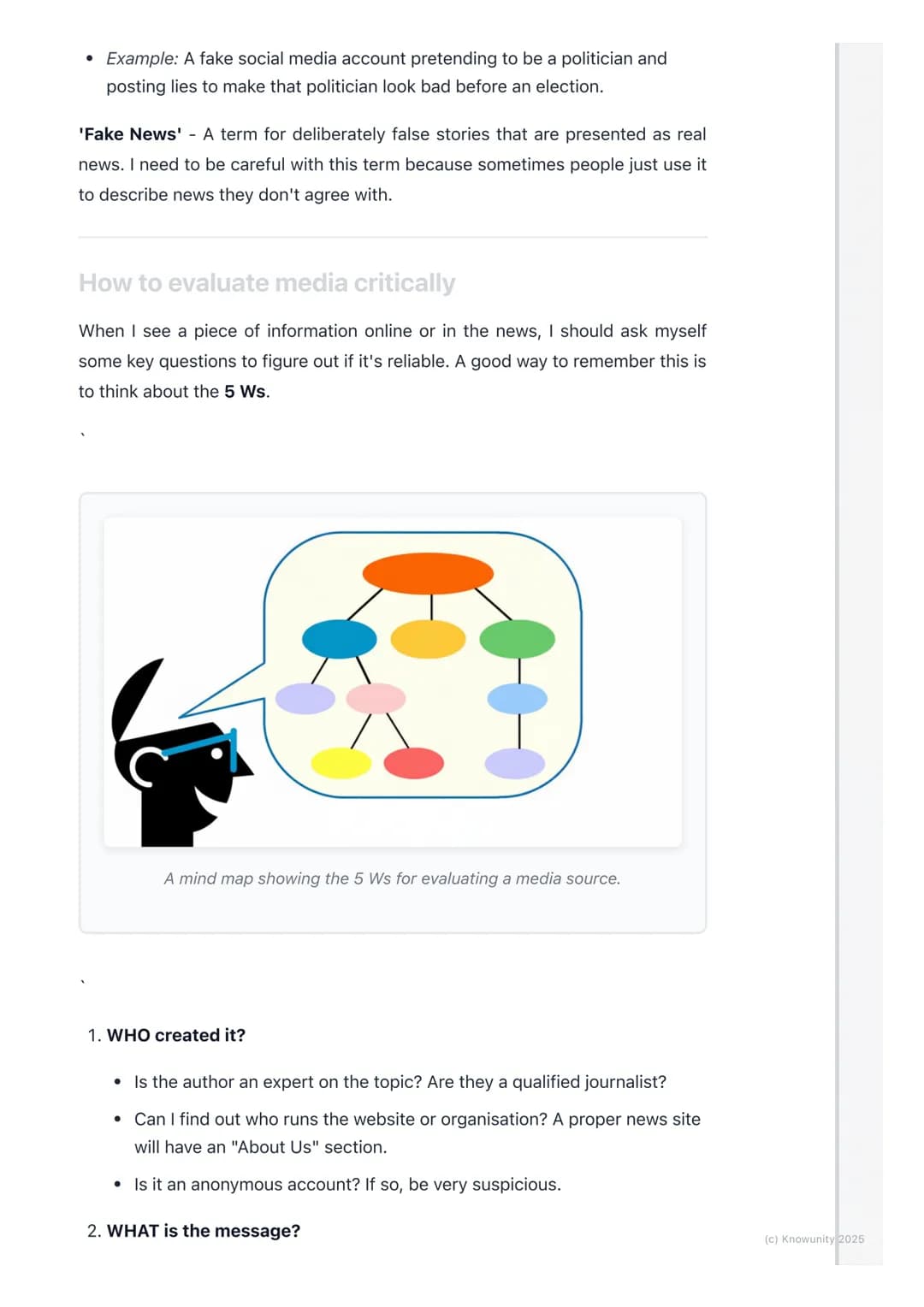
Spotting Misinformation vs Disinformation
Here's where things get interesting—not all false information is created equal. Misinformation is when someone shares something false without realising it's wrong. Think of your aunt sharing that celebrity death hoax on Facebook because she genuinely believed it was true.
Disinformation is far more sinister—it's deliberately false information spread to deceive people. Picture a fake social media account pretending to be a politician and posting lies to damage their reputation before an election. This stuff is planned and malicious.
The term "fake news" gets thrown around a lot, but be careful with it. Whilst it does refer to deliberately false stories presented as real news, some people misuse it to dismiss any news they simply don't agree with.
Top tip: When you see shocking information, pause before sharing. Ask yourself: could this be someone's honest mistake, or does it feel deliberately designed to manipulate?
3
of 6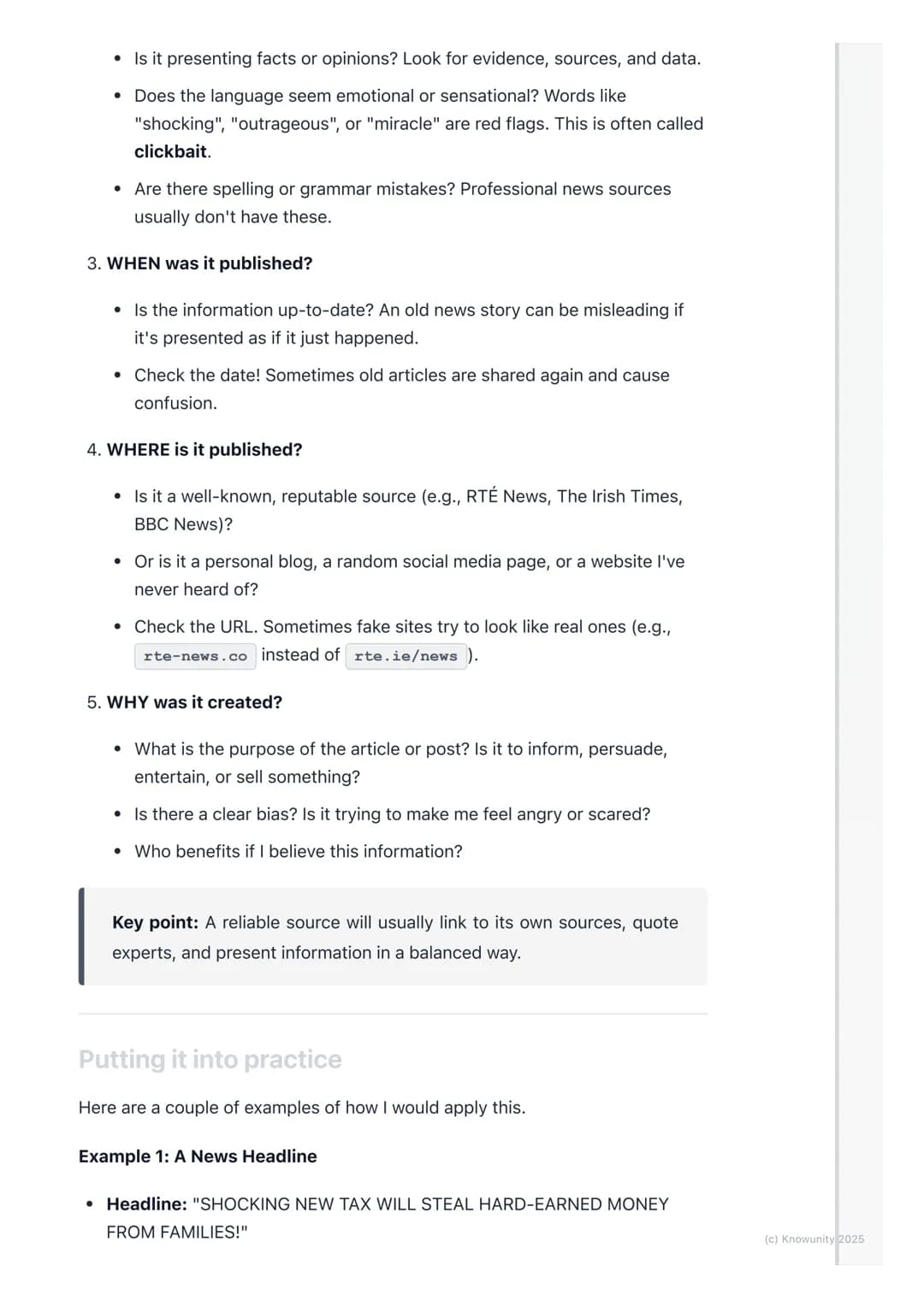
The 5 Ws: Your Fact-Checking Framework
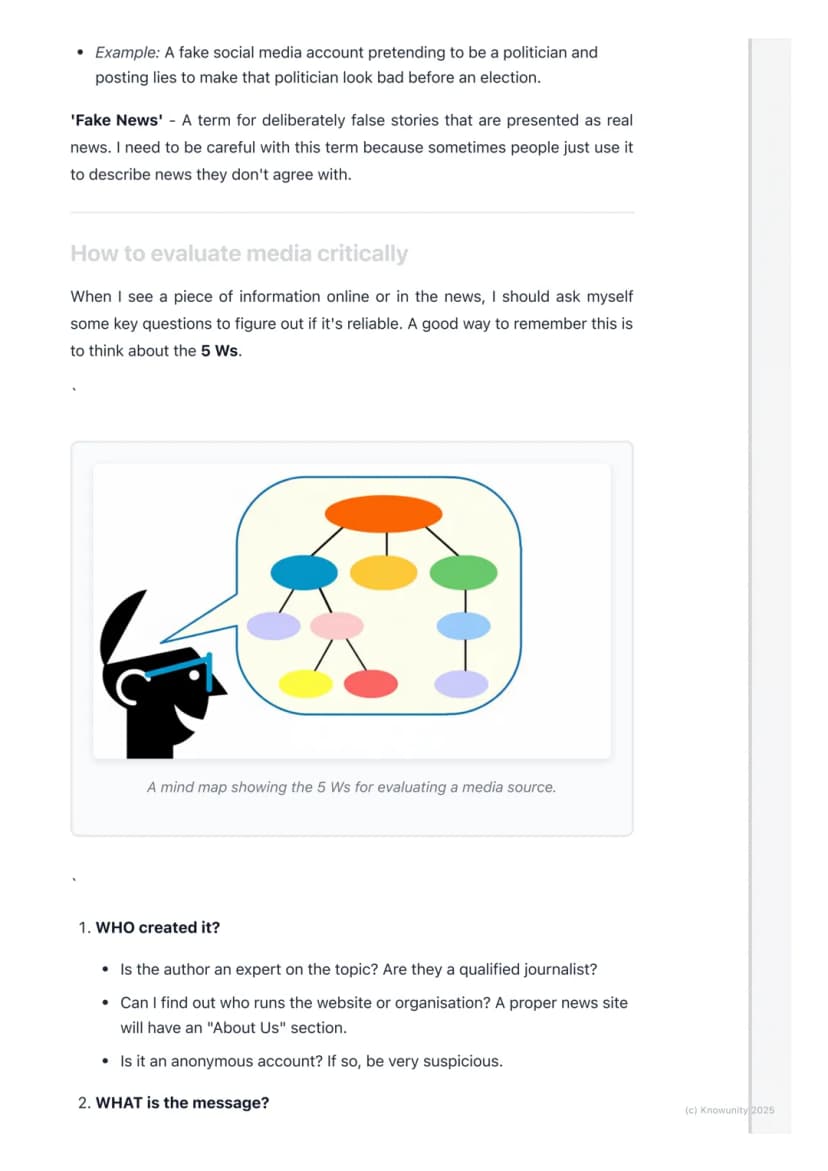
When you encounter any piece of information online, become a detective using the 5 Ws. This simple framework will help you evaluate whether something's reliable or dodgy.
WHO created it? Look for qualified journalists or experts with credentials. Proper news sites have "About Us" sections—anonymous accounts should make you immediately suspicious. WHAT is the actual message? Check if it's presenting facts with evidence or just opinions dressed up as facts.
WHEN was it published? Old news stories can be misleading if they're presented as current events—always check the date! WHERE is it published? Stick to reputable sources like RTÉ News, The Irish Times, or BBC News rather than random blogs or suspicious websites.
WHY was it created? This is crucial—is it meant to inform, persuade, entertain, or sell something? If it's trying to make you angry or scared, that's a massive red flag. Reliable sources link to their sources, quote experts, and present information in a balanced way.
Quick check: Emotional language like "shocking," "outrageous," or "miracle" often signals clickbait rather than genuine news.
4
of 6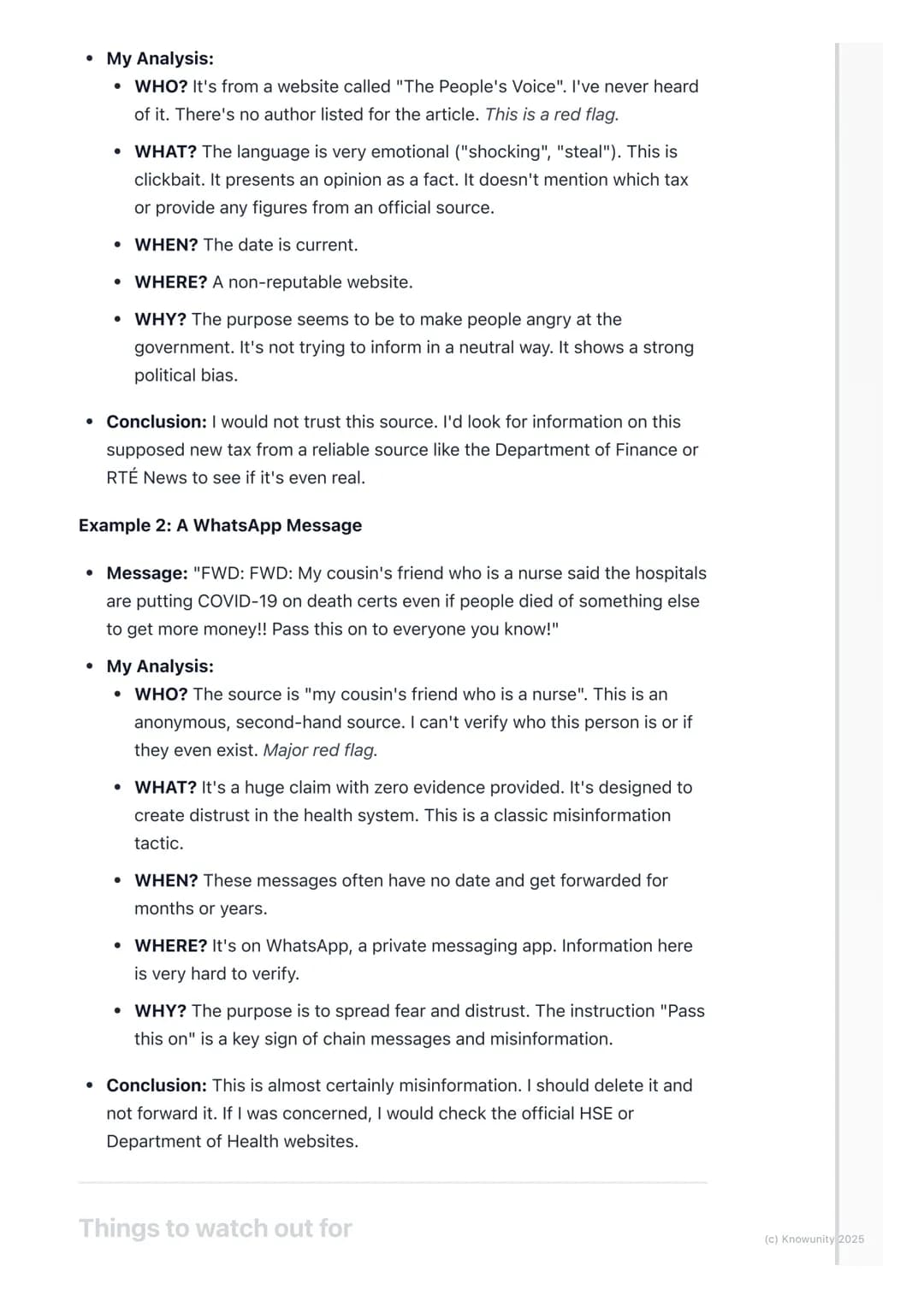
Real-World Examples in Action
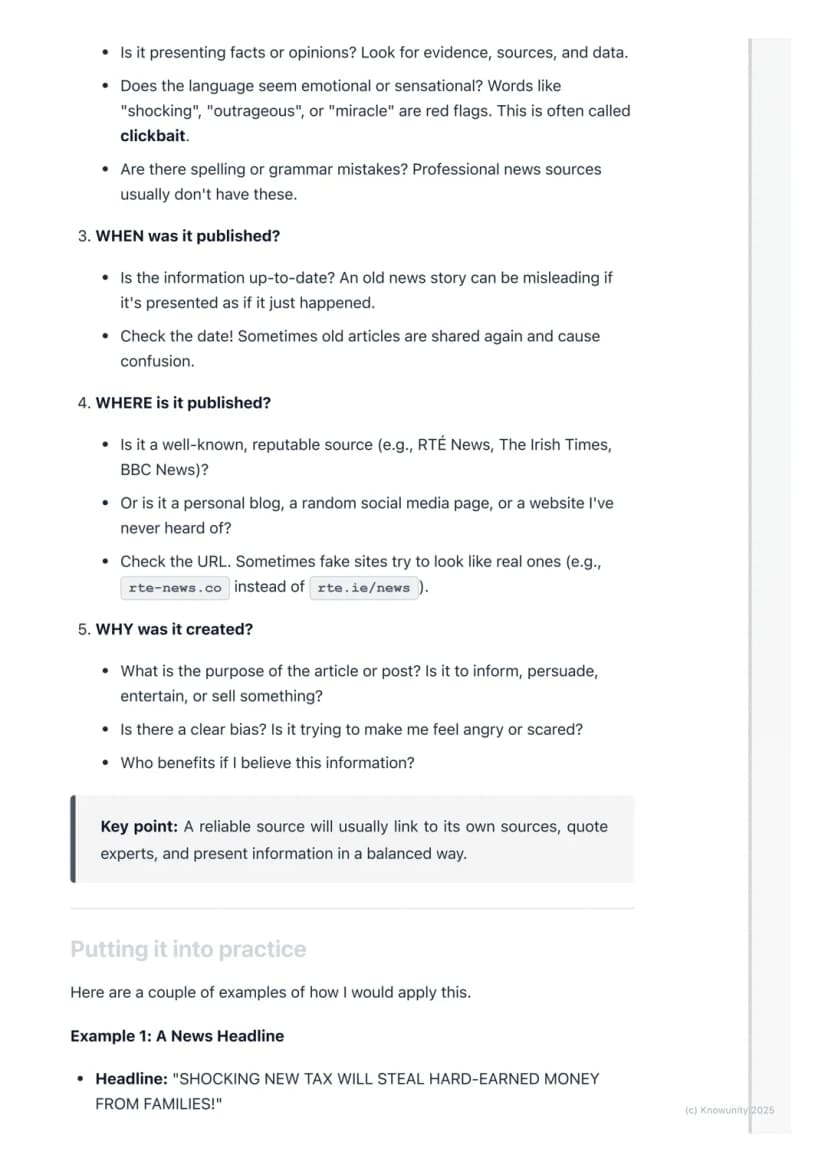
Let's put this into practice with actual examples you might encounter. Imagine seeing the headline: "SHOCKING NEW TAX WILL STEAL HARD-EARNED MONEY FROM FAMILIES!" from a website called "The People's Voice."
Using our 5 Ws, this fails multiple tests: unknown website, no author listed, extremely emotional language, and clear political bias designed to anger rather than inform. You'd want to check official sources like the Department of Finance or RTÉ News to see if this tax even exists.
WhatsApp messages are particularly tricky. Those "FWD: FWD:" messages claiming insider knowledge from someone's "cousin's friend who's a nurse" are classic misinformation. They have anonymous sources, zero evidence, and usually end with "Pass this on to everyone!"—a dead giveaway.
The golden rule? If something seems designed to shock you or make you immediately share it, take a step back and verify it through official channels first.
Pro move: When in doubt, don't share it. Check reliable sources first—your friends will thank you for not cluttering their feeds with nonsense.
5
of 6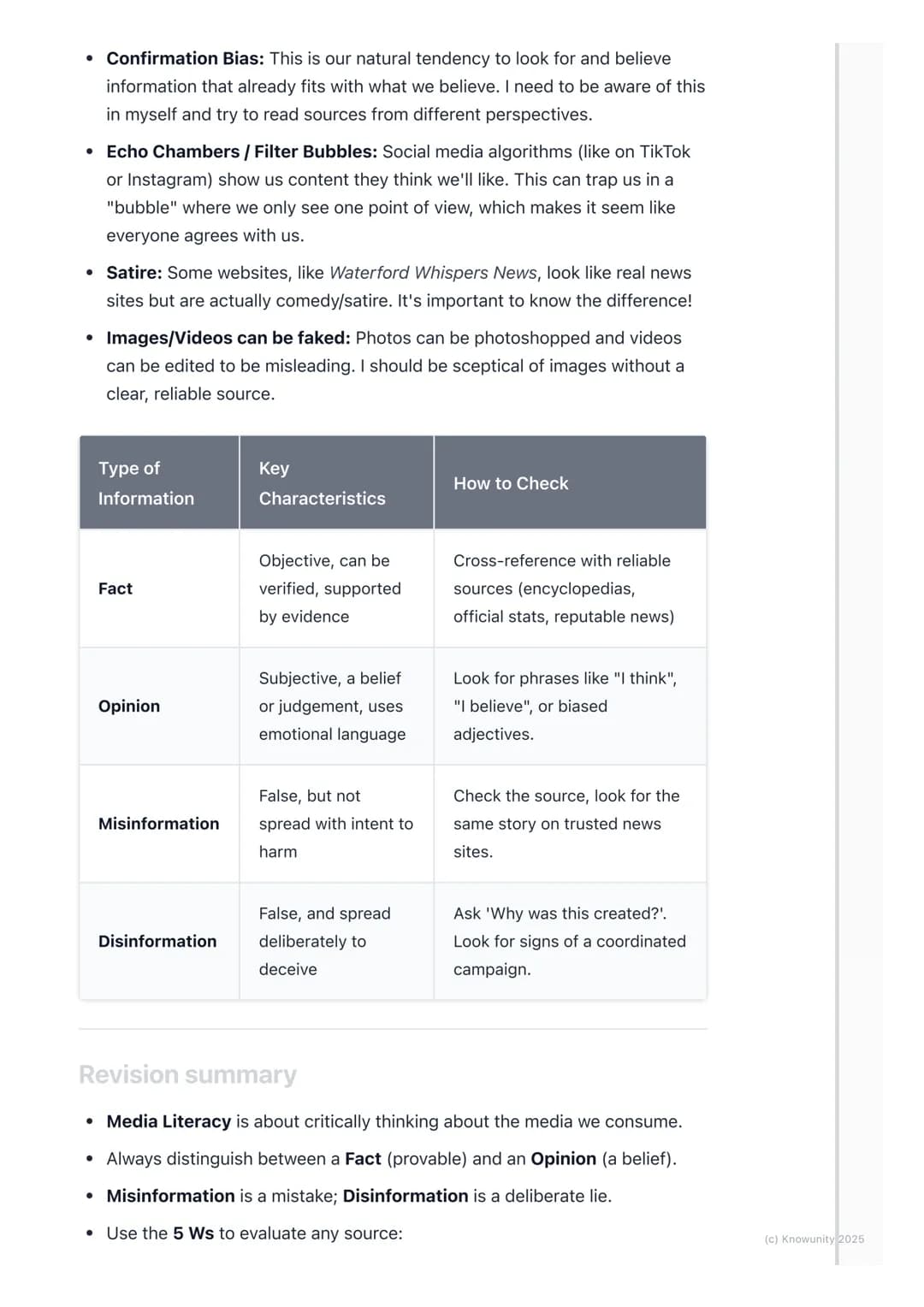
Avoiding Digital Traps
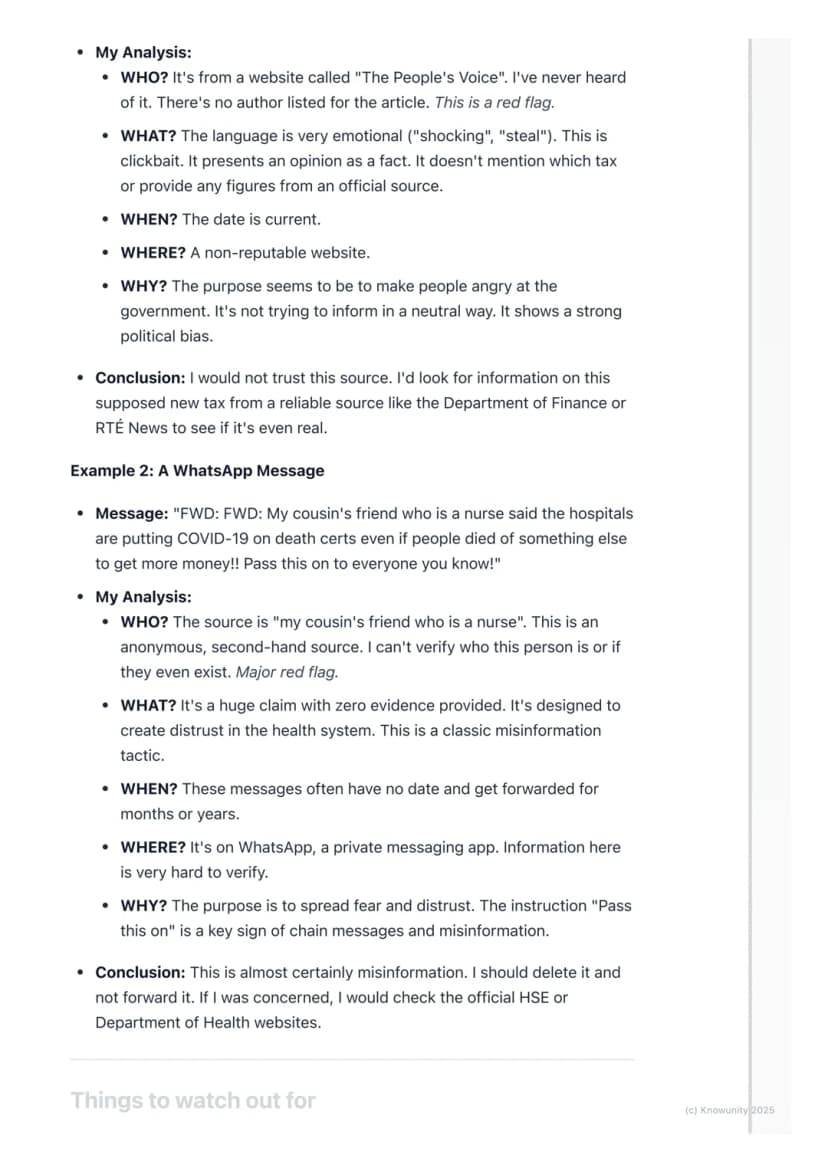
Your brain has some built-in quirks that make you vulnerable to misinformation. Confirmation bias means you naturally seek out information that supports what you already believe whilst ignoring contradictory evidence. Being aware of this helps you actively seek different perspectives.
Social media algorithms create echo chambers or filter bubbles by showing you content they think you'll like. This can trap you in a world where everyone seems to agree with you, making opposing views seem more extreme than they actually are.
Don't forget about satire sites like Waterford Whispers News—they look like real news but are actually comedy. Always check if a site is meant to be taken seriously! Images and videos can be manipulated too, so be sceptical of shocking visual content without clear, reliable sources.
The key is balancing healthy scepticism with staying informed. You don't need to question everything, but developing these critical thinking habits will serve you well in our digital world.
Smart strategy: Follow news sources with different perspectives and fact-checking sites to get a more complete picture of important issues.
6
of 6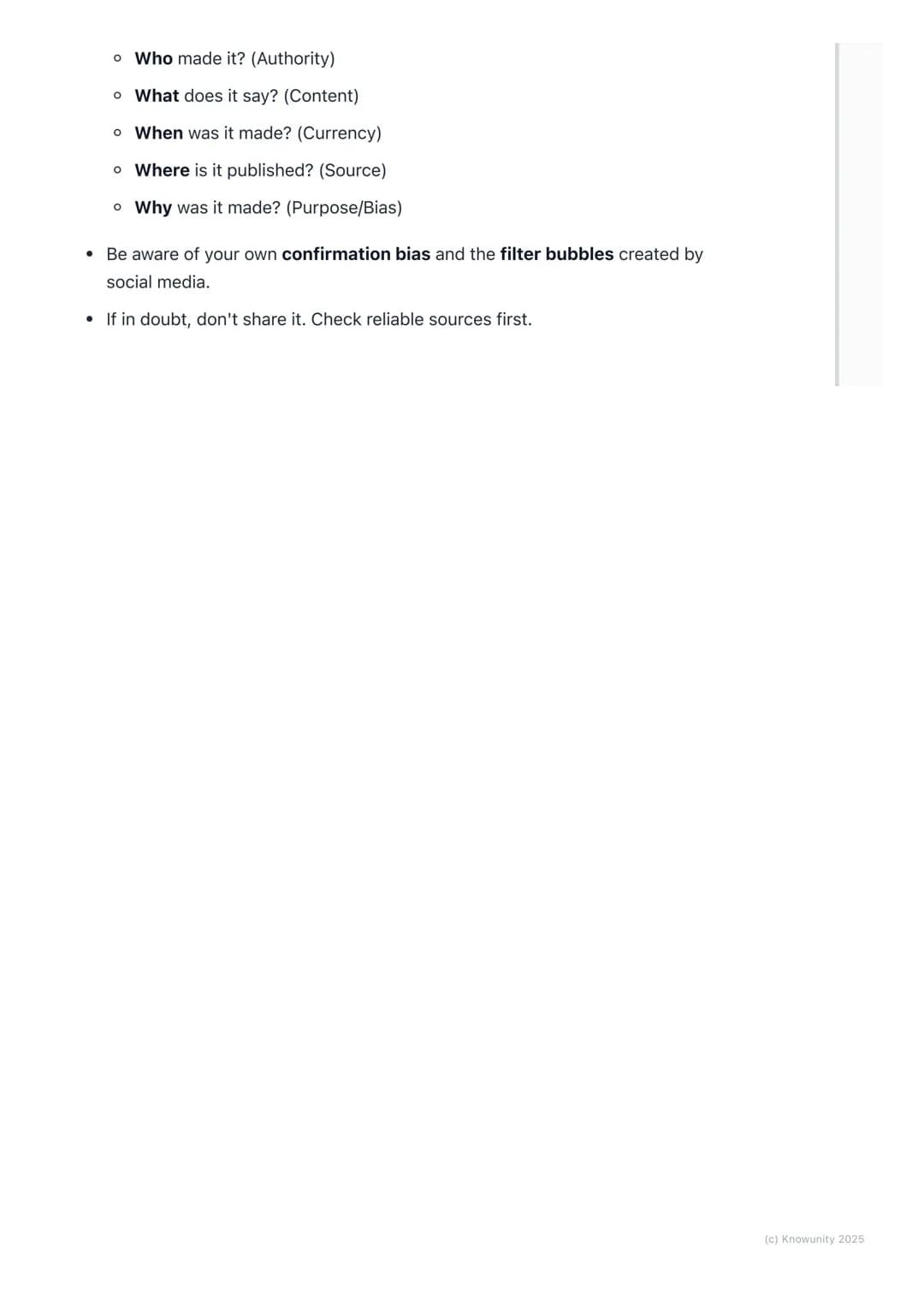
Quick Reference Guide
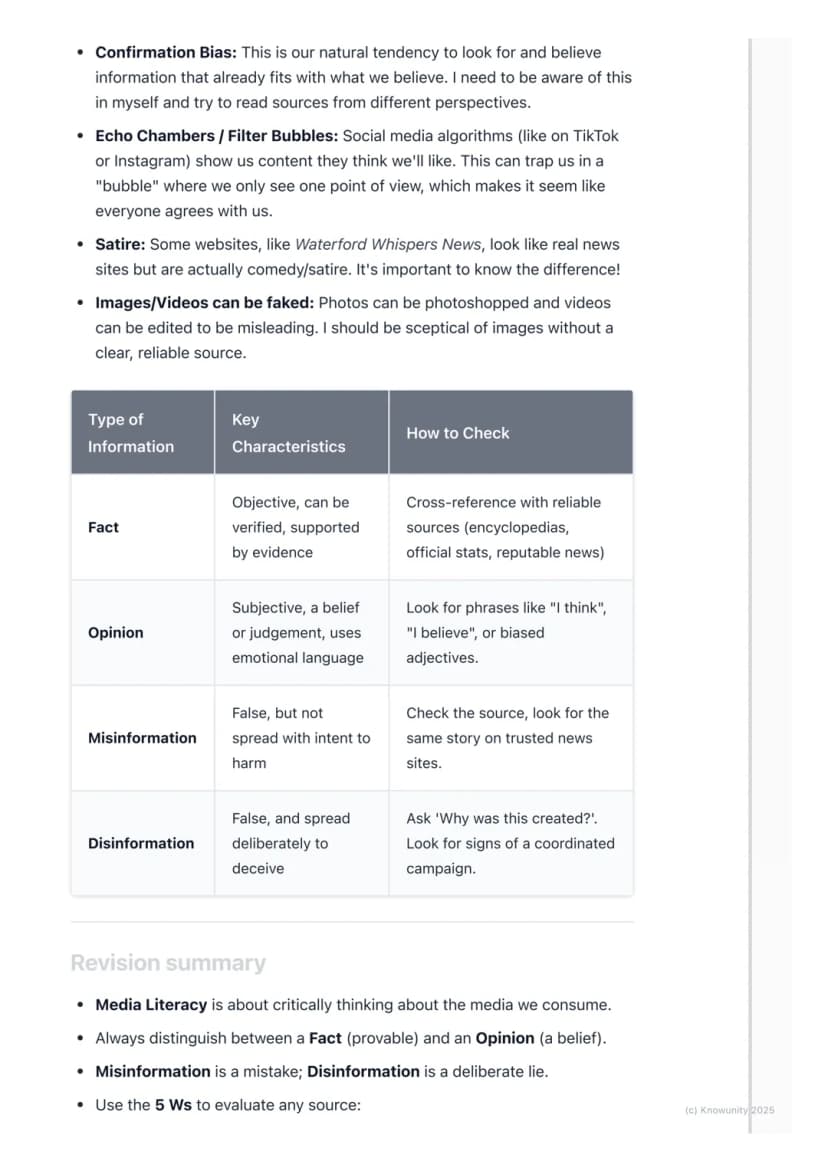
Here's your essential toolkit for becoming media literate. Remember that facts are objective and verifiable—you can check them against reliable sources like encyclopedias or official statistics. Opinions are subjective beliefs that often use emotional language and phrases like "I think" or "I believe."
When you encounter misinformation, it's usually an honest mistake that you can verify by checking the same story on trusted news sites. Disinformation requires asking deeper questions about why the information was created and looking for signs of coordinated campaigns.
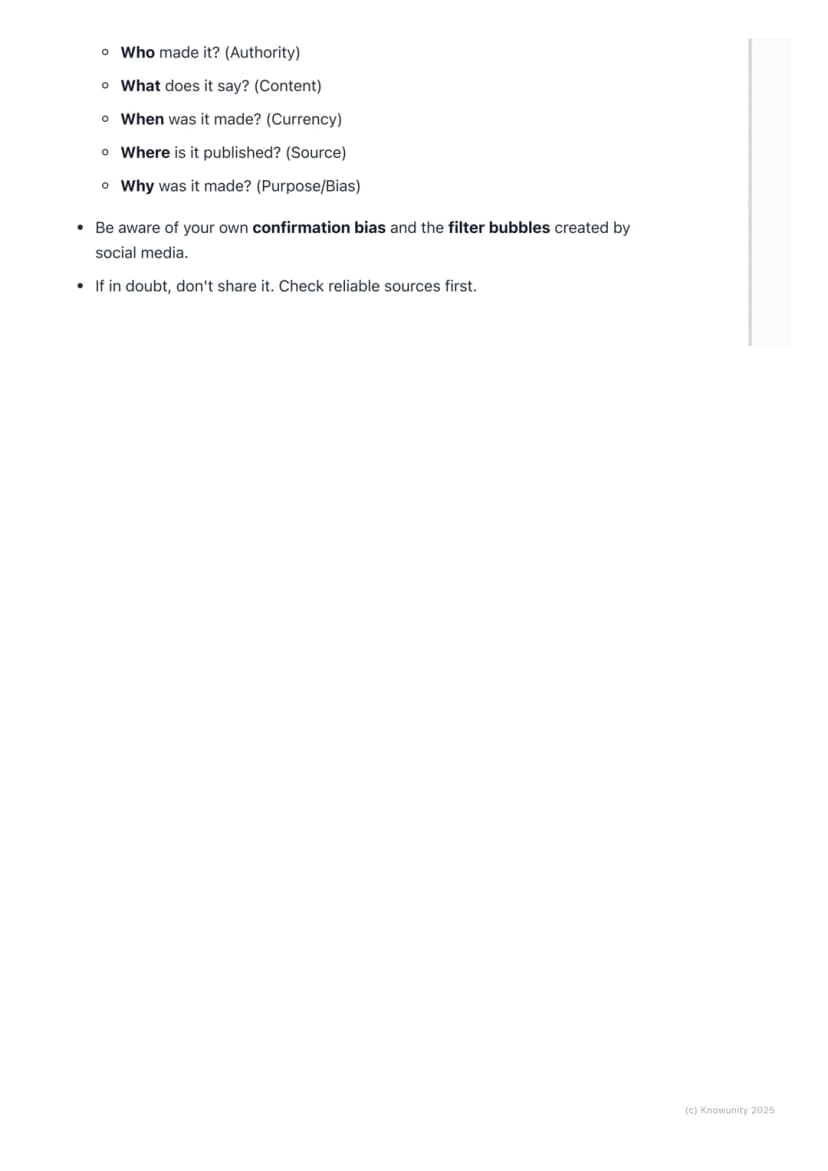
Your 5 Ws framework covers everything: Who made it (authority), What does it say (content), When was it made (currency), Where is it published (source), and Why was it made (purpose and bias). This systematic approach will quickly help you separate reliable information from rubbish.
Stay aware of your own biases and the filter bubbles created by social media algorithms. The goal isn't to become paranoid about every piece of information—it's to develop the skills to navigate our complex media landscape confidently and responsibly.
Final thought: Being media literate is an ongoing process. The more you practise these skills, the more natural they'll become in your daily digital life.
Pensamos que nunca lo preguntarías...
¿Qué es Knowunity AI companion?
Nuestro compañero de IA está específicamente adaptado a las necesidades de los estudiantes. Basándonos en los millones de contenidos que tenemos en la plataforma, podemos dar a los estudiantes respuestas realmente significativas y relevantes. Pero no se trata solo de respuestas, el compañero también guía a los estudiantes a través de sus retos de aprendizaje diarios, con planes de aprendizaje personalizados, cuestionarios o contenidos en el chat y una personalización del 100% basada en las habilidades y el desarrollo de los estudiantes.
¿Dónde puedo descargar la app Knowunity?
Puedes descargar la app en Google Play Store y Apple App Store.
¿Knowunity es totalmente gratuito?
Sí, tienes acceso gratuito a los contenidos de la aplicación y a nuestro compañero de IA. Para desbloquear determinadas funciones de la aplicación, puedes adquirir Knowunity Pro.
Contenidos más populares
9 Irish
IrishIrish oral questions and answers
Questions and answers for the leaving cert oral
5th Year4264
 English
Key Quotes : Sive
Key Quotes and explanations: Sive
6th Year2842
IrishIrish oral questions
Outline of oral questions
5th Year2055
IrishIníon- le hÁine Durkin
Aine Durkin’s poem, Iníon: Themes & summary
5th Year890
IrishIrish poetry 2027
Iníon + Dínit an Bhróin
5th Year1153
IrishLC HL notes- Iníon (poem)
Includes poem in English and Irish, theme, key words & phrases
5th Year2304
EnglishCultural Context : Shawshank Redemption : Sive : Small Things Like These
Comparative Study : Cultural Context : Shawshank Redemption, Sive and Small Things Like These
6th Year1430
IrishMo Ghrá-sa (Idir Lúibíní)
Notes on mo ghrá-sa
5th Year380
IrishAn Gaeilge Aiste
Irish Language essay
6th Year1320
¿No encuentras lo que buscas? Explora otros temas.
Mira lo que dicen nuestros usuarios. Les encanta - y a tí también.
4.6/5App Store
4.7/5Google Play
La app es muy fácil de usar y está muy bien diseñada. Hasta ahora he encontrado todo lo que estaba buscando y he podido aprender mucho de las presentaciones. Definitivamente utilizaré la aplicación para un examen de clase. Y, por supuesto, también me sirve mucho de inspiración.
Pablousuario de iOS
Esta app es realmente genial. Hay tantos apuntes de clase y ayuda [...]. Tengo problemas con matemáticas, por ejemplo, y la aplicación tiene muchas opciones de ayuda. Gracias a Knowunity, he mejorado en mates. Se la recomiendo a todo el mundo.
Elenausuaria de Android
Vaya, estoy realmente sorprendida. Acabo de probar la app porque la he visto anunciada muchas veces y me he quedado absolutamente alucinada. Esta app es LA AYUDA que quieres para el insti y, sobre todo, ofrece muchísimas cosas, como ejercicios y hojas informativas, que a mí personalmente me han sido MUY útiles.
Anausuaria de iOS
Politics & Society1 visualizaciones·Actualizado Jun 14, 2026·6 páginasUnderstanding Media Literacy: Identifying Bias and Evaluating Facts
Ever wondered if that shocking news story on TikTok is actually true? Media literacy is your superpower for navigating today's information overload. It's all about becoming a detective who can spot fake news, understand bias, and make smart decisions about...
1
of 6
Inscríbete para ver los apuntes. ¡Es gratis!
- Acceso a todos los documentos
- Mejora tus notas
- Únete a millones de estudiantes
Understanding Media Literacy Basics
Think of media literacy as your mental toolkit for dealing with everything from Instagram posts to news articles. It's not just about consuming content—it's about analysing and evaluating what you're seeing. With influencers, news websites, and social media constantly bombarding us with information, this skill is absolutely crucial for avoiding being misled.
The key is learning to distinguish between different types of information. A fact is something you can actually prove true, like "The River Shannon is Ireland's longest river." An opinion, on the other hand, is someone's personal belief or feeling that can't be proven right or wrong—like saying "The Late Late Show is boring."
Understanding bias is equally important. This happens when a story clearly favours one side over another instead of staying neutral. You'll spot this when a newspaper only prints positive stories about one political party whilst constantly criticising others.
Remember: Being media literate doesn't mean being paranoid—it means being smart about the information you consume and share.
2
of 6Inscríbete para ver los apuntes. ¡Es gratis!
- Acceso a todos los documentos
- Mejora tus notas
- Únete a millones de estudiantes
Spotting Misinformation vs Disinformation
Here's where things get interesting—not all false information is created equal. Misinformation is when someone shares something false without realising it's wrong. Think of your aunt sharing that celebrity death hoax on Facebook because she genuinely believed it was true.
Disinformation is far more sinister—it's deliberately false information spread to deceive people. Picture a fake social media account pretending to be a politician and posting lies to damage their reputation before an election. This stuff is planned and malicious.
The term "fake news" gets thrown around a lot, but be careful with it. Whilst it does refer to deliberately false stories presented as real news, some people misuse it to dismiss any news they simply don't agree with.
Top tip: When you see shocking information, pause before sharing. Ask yourself: could this be someone's honest mistake, or does it feel deliberately designed to manipulate?
3
of 6Inscríbete para ver los apuntes. ¡Es gratis!
- Acceso a todos los documentos
- Mejora tus notas
- Únete a millones de estudiantes
The 5 Ws: Your Fact-Checking Framework
When you encounter any piece of information online, become a detective using the 5 Ws. This simple framework will help you evaluate whether something's reliable or dodgy.
WHO created it? Look for qualified journalists or experts with credentials. Proper news sites have "About Us" sections—anonymous accounts should make you immediately suspicious. WHAT is the actual message? Check if it's presenting facts with evidence or just opinions dressed up as facts.
WHEN was it published? Old news stories can be misleading if they're presented as current events—always check the date! WHERE is it published? Stick to reputable sources like RTÉ News, The Irish Times, or BBC News rather than random blogs or suspicious websites.
WHY was it created? This is crucial—is it meant to inform, persuade, entertain, or sell something? If it's trying to make you angry or scared, that's a massive red flag. Reliable sources link to their sources, quote experts, and present information in a balanced way.
Quick check: Emotional language like "shocking," "outrageous," or "miracle" often signals clickbait rather than genuine news.
4
of 6Inscríbete para ver los apuntes. ¡Es gratis!
- Acceso a todos los documentos
- Mejora tus notas
- Únete a millones de estudiantes
Real-World Examples in Action
Let's put this into practice with actual examples you might encounter. Imagine seeing the headline: "SHOCKING NEW TAX WILL STEAL HARD-EARNED MONEY FROM FAMILIES!" from a website called "The People's Voice."
Using our 5 Ws, this fails multiple tests: unknown website, no author listed, extremely emotional language, and clear political bias designed to anger rather than inform. You'd want to check official sources like the Department of Finance or RTÉ News to see if this tax even exists.
WhatsApp messages are particularly tricky. Those "FWD: FWD:" messages claiming insider knowledge from someone's "cousin's friend who's a nurse" are classic misinformation. They have anonymous sources, zero evidence, and usually end with "Pass this on to everyone!"—a dead giveaway.
The golden rule? If something seems designed to shock you or make you immediately share it, take a step back and verify it through official channels first.
Pro move: When in doubt, don't share it. Check reliable sources first—your friends will thank you for not cluttering their feeds with nonsense.
5
of 6Inscríbete para ver los apuntes. ¡Es gratis!
- Acceso a todos los documentos
- Mejora tus notas
- Únete a millones de estudiantes
Avoiding Digital Traps
Your brain has some built-in quirks that make you vulnerable to misinformation. Confirmation bias means you naturally seek out information that supports what you already believe whilst ignoring contradictory evidence. Being aware of this helps you actively seek different perspectives.
Social media algorithms create echo chambers or filter bubbles by showing you content they think you'll like. This can trap you in a world where everyone seems to agree with you, making opposing views seem more extreme than they actually are.
Don't forget about satire sites like Waterford Whispers News—they look like real news but are actually comedy. Always check if a site is meant to be taken seriously! Images and videos can be manipulated too, so be sceptical of shocking visual content without clear, reliable sources.
The key is balancing healthy scepticism with staying informed. You don't need to question everything, but developing these critical thinking habits will serve you well in our digital world.
Smart strategy: Follow news sources with different perspectives and fact-checking sites to get a more complete picture of important issues.
6
of 6Inscríbete para ver los apuntes. ¡Es gratis!
- Acceso a todos los documentos
- Mejora tus notas
- Únete a millones de estudiantes
Quick Reference Guide
Here's your essential toolkit for becoming media literate. Remember that facts are objective and verifiable—you can check them against reliable sources like encyclopedias or official statistics. Opinions are subjective beliefs that often use emotional language and phrases like "I think" or "I believe."
When you encounter misinformation, it's usually an honest mistake that you can verify by checking the same story on trusted news sites. Disinformation requires asking deeper questions about why the information was created and looking for signs of coordinated campaigns.
Your 5 Ws framework covers everything: Who made it (authority), What does it say (content), When was it made (currency), Where is it published (source), and Why was it made (purpose and bias). This systematic approach will quickly help you separate reliable information from rubbish.
Stay aware of your own biases and the filter bubbles created by social media algorithms. The goal isn't to become paranoid about every piece of information—it's to develop the skills to navigate our complex media landscape confidently and responsibly.
Final thought: Being media literate is an ongoing process. The more you practise these skills, the more natural they'll become in your daily digital life.
Pensamos que nunca lo preguntarías...
¿Qué es Knowunity AI companion?
Nuestro compañero de IA está específicamente adaptado a las necesidades de los estudiantes. Basándonos en los millones de contenidos que tenemos en la plataforma, podemos dar a los estudiantes respuestas realmente significativas y relevantes. Pero no se trata solo de respuestas, el compañero también guía a los estudiantes a través de sus retos de aprendizaje diarios, con planes de aprendizaje personalizados, cuestionarios o contenidos en el chat y una personalización del 100% basada en las habilidades y el desarrollo de los estudiantes.
¿Dónde puedo descargar la app Knowunity?
Puedes descargar la app en Google Play Store y Apple App Store.
¿Knowunity es totalmente gratuito?
Sí, tienes acceso gratuito a los contenidos de la aplicación y a nuestro compañero de IA. Para desbloquear determinadas funciones de la aplicación, puedes adquirir Knowunity Pro.
Contenidos más populares
9IrishIrish oral questions and answers
Questions and answers for the leaving cert oral
5th Year4264
EnglishKey Quotes : Sive
Key Quotes and explanations: Sive
6th Year2842
IrishIrish oral questions
Outline of oral questions
5th Year2055
IrishIníon- le hÁine Durkin
Aine Durkin’s poem, Iníon: Themes & summary
5th Year890
IrishIrish poetry 2027
Iníon + Dínit an Bhróin
5th Year1153
IrishLC HL notes- Iníon (poem)
Includes poem in English and Irish, theme, key words & phrases
5th Year2304
EnglishCultural Context : Shawshank Redemption : Sive : Small Things Like These
Comparative Study : Cultural Context : Shawshank Redemption, Sive and Small Things Like These
6th Year1430
IrishMo Ghrá-sa (Idir Lúibíní)
Notes on mo ghrá-sa
5th Year380
IrishAn Gaeilge Aiste
Irish Language essay
6th Year1320
¿No encuentras lo que buscas? Explora otros temas.
Mira lo que dicen nuestros usuarios. Les encanta - y a tí también.
4.6/5App Store
4.7/5Google Play
La app es muy fácil de usar y está muy bien diseñada. Hasta ahora he encontrado todo lo que estaba buscando y he podido aprender mucho de las presentaciones. Definitivamente utilizaré la aplicación para un examen de clase. Y, por supuesto, también me sirve mucho de inspiración.
Pablousuario de iOS
Esta app es realmente genial. Hay tantos apuntes de clase y ayuda [...]. Tengo problemas con matemáticas, por ejemplo, y la aplicación tiene muchas opciones de ayuda. Gracias a Knowunity, he mejorado en mates. Se la recomiendo a todo el mundo.
Elenausuaria de Android
Vaya, estoy realmente sorprendida. Acabo de probar la app porque la he visto anunciada muchas veces y me he quedado absolutamente alucinada. Esta app es LA AYUDA que quieres para el insti y, sobre todo, ofrece muchísimas cosas, como ejercicios y hojas informativas, que a mí personalmente me han sido MUY útiles.
Anausuaria de iOS