
Ever wondered why your fridge door stays shut or how... Mostrar más
 Physics1 visualizaciones·Actualizado May 31, 2026·7 páginas
Understanding Magnets and Magnetic Fields
1 / 7
1
of 7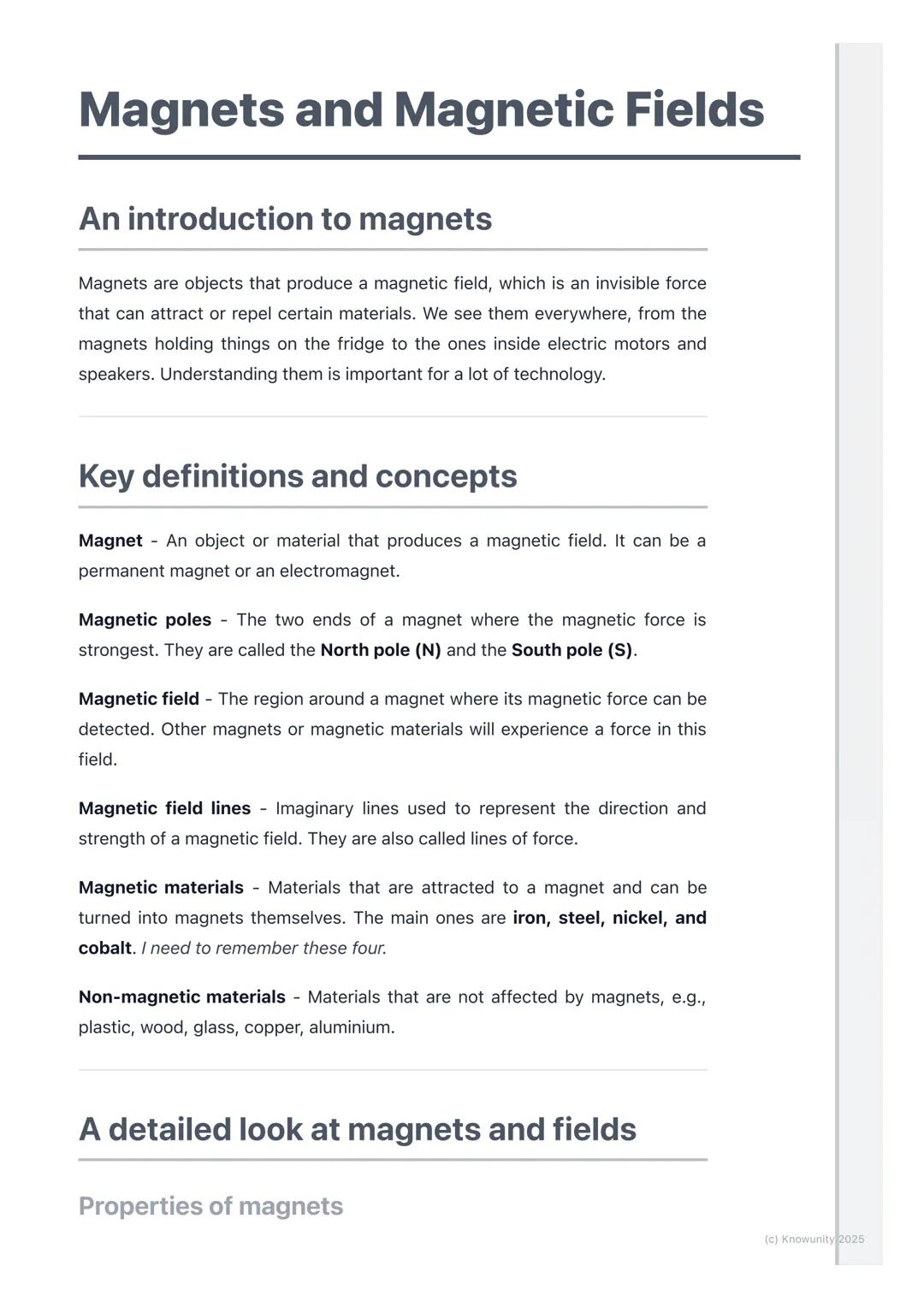
What Are Magnets and Magnetic Fields?
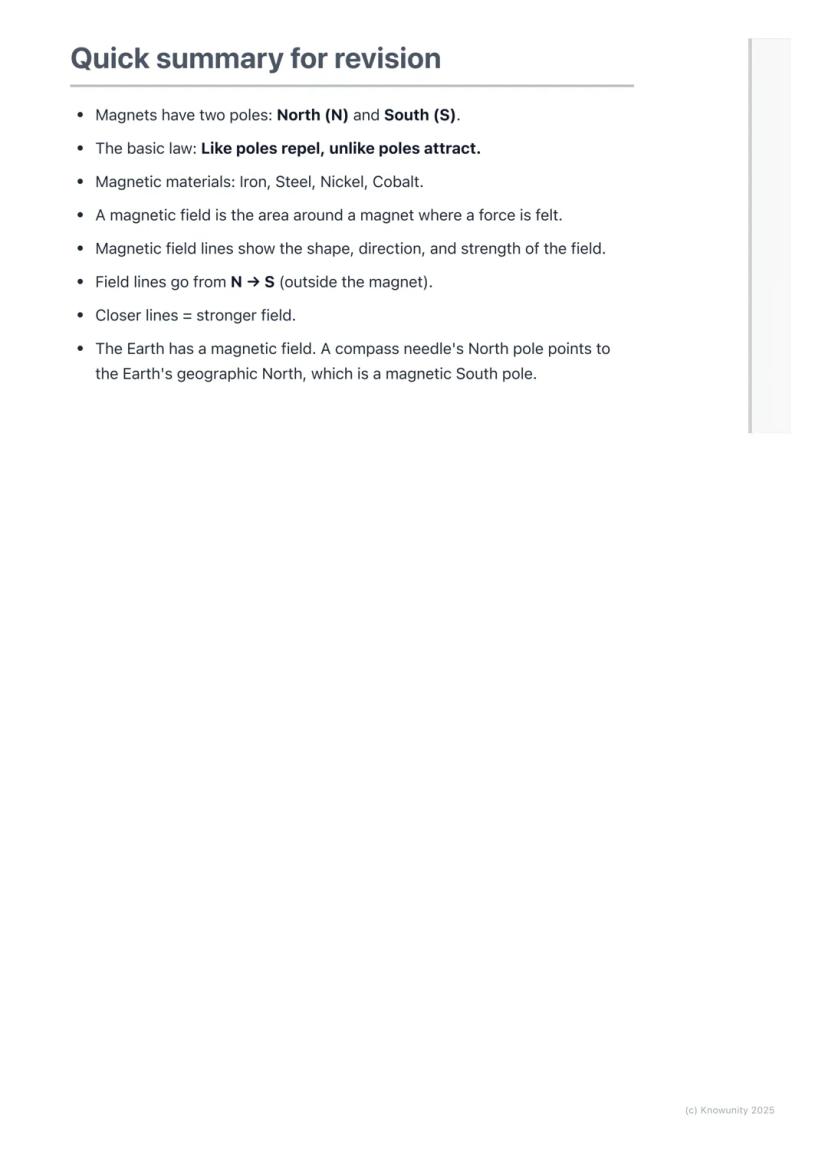
You're surrounded by magnets every day, from your phone's speakers to the motor in your washing machine. Magnets are objects that create an invisible force field around them, and this magnetic field can attract certain materials or push other magnets away.
The really important stuff to remember: magnets have two magnetic poles - a North pole (N) and a South pole (S) - where the magnetic force is strongest. Only four materials are naturally magnetic materials: iron, steel, nickel, and cobalt. Everything else like plastic, wood, or copper? Completely unaffected by magnets.
Magnetic field lines are how we draw the invisible field to see what's happening. Think of them as the paths that show where the magnetic force is acting and how strong it is.
Quick tip: Steel is just iron mixed with other elements, which is why it's magnetic too - perfect for making strong permanent magnets!
2
of 7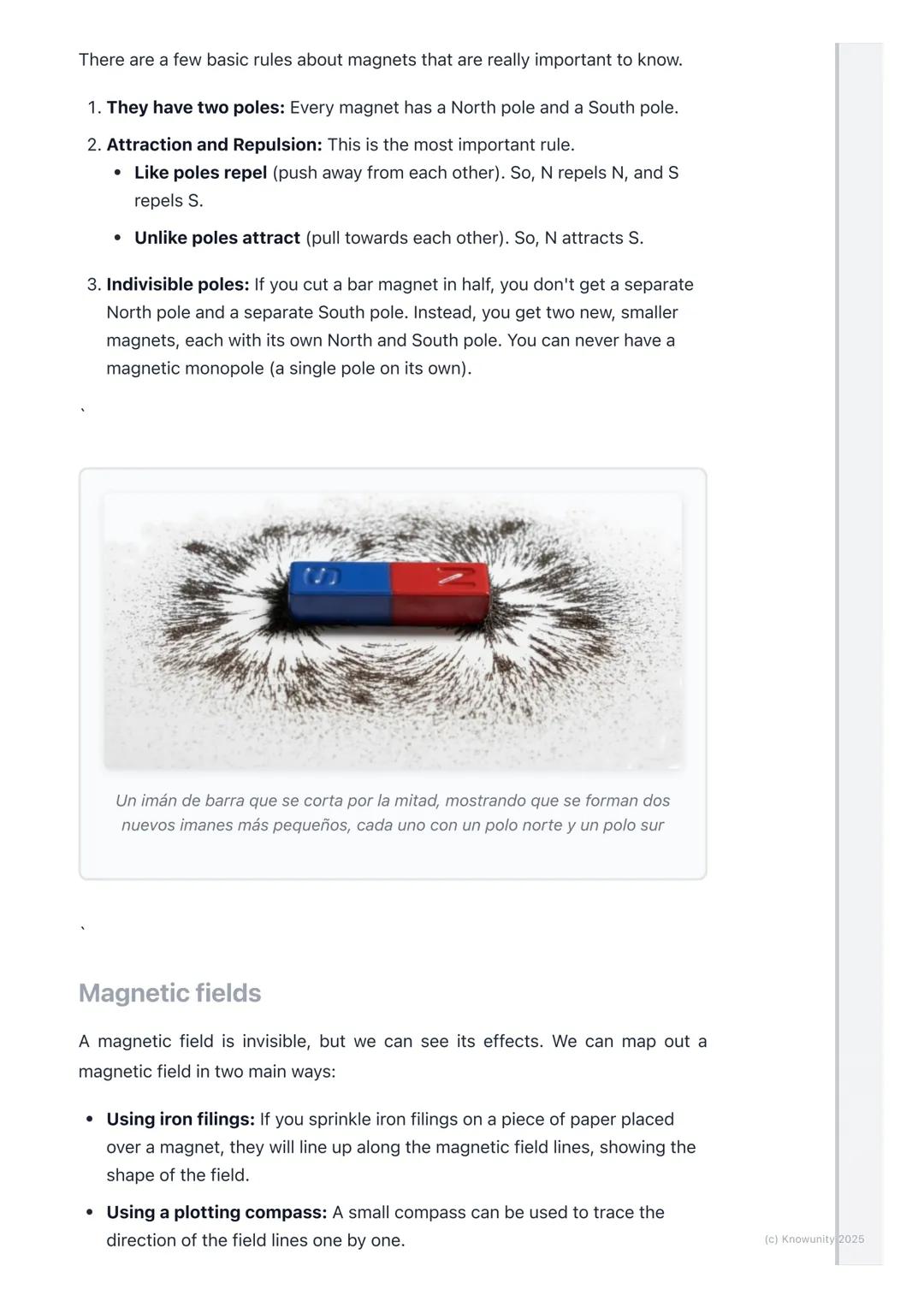
The Golden Rules of Magnetism
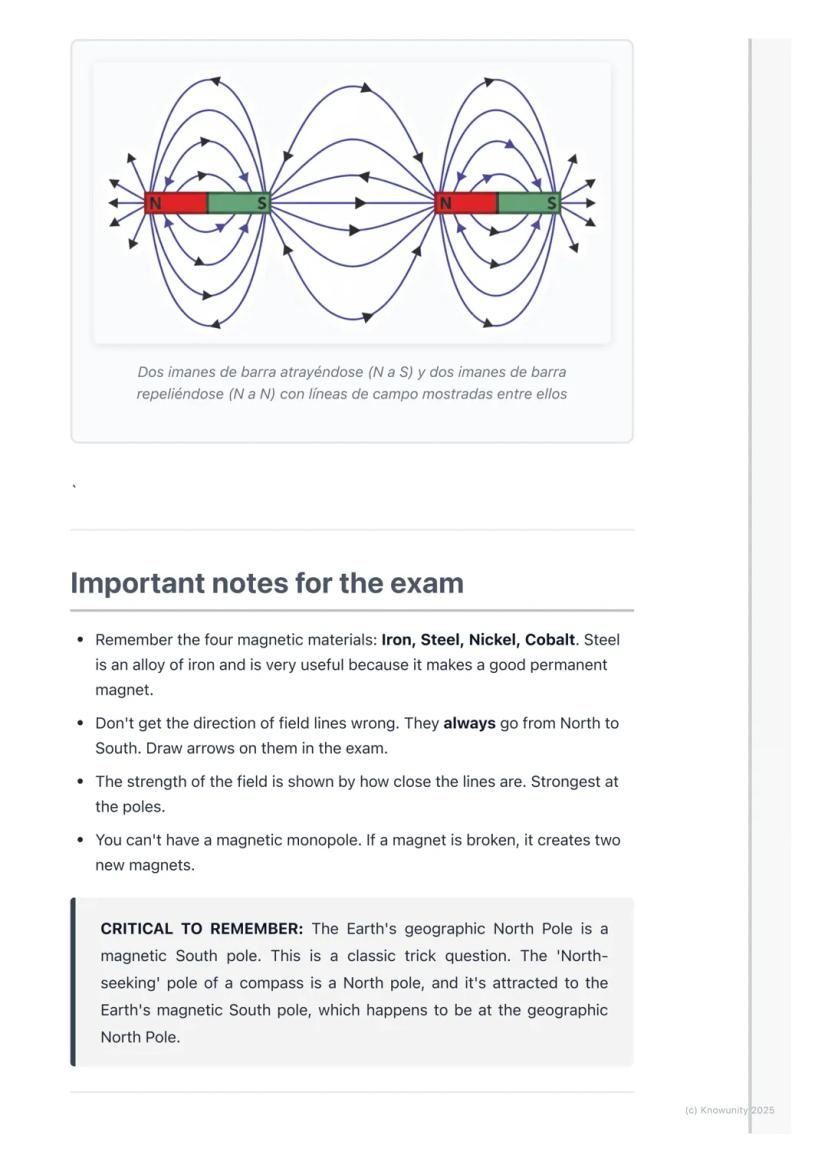
Here's where magnetism gets predictable, and these rules will save you in every exam. Like poles repel (N pushes away N, S pushes away S) and unlike poles attract (N pulls towards S). It's that simple, but it explains everything magnets do.
Here's something that might blow your mind: if you snap a bar magnet in half, you don't get separate N and S pieces. Instead, you get two complete magnets, each with their own North and South poles. You can never isolate a single pole on its own.
We can actually see magnetic fields by sprinkling iron filings around a magnet - they line up along the invisible field lines like magic. Alternatively, you can use a small compass to trace the field lines one by one.
Remember this: The closer together the field lines are drawn, the stronger the magnetic force is in that spot!
3
of 7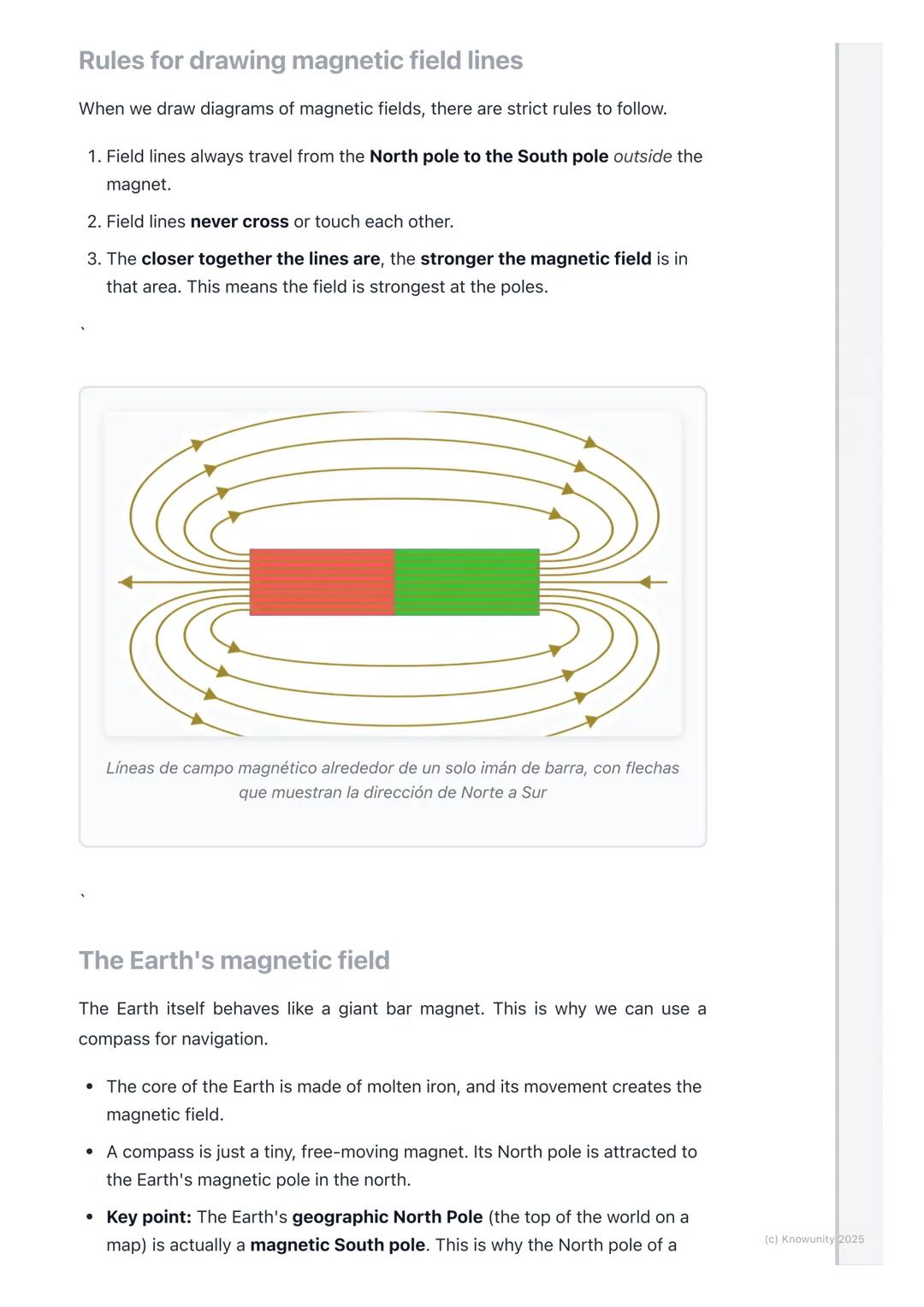
Drawing Magnetic Fields Like a Pro
When you're sketching magnetic field diagrams, there are three non-negotiable rules. Field lines always travel from North to South outside the magnet, they never cross each other, and closer lines mean a stronger field.
The Earth's magnetic field is basically our planet acting like a massive bar magnet. The molten iron core creates this field, which is why compasses work for navigation.
Here's the tricky bit that catches loads of students: Earth's geographic North Pole (the top on maps) is actually a magnetic South pole. That's why the North end of a compass needle points towards it - opposites attract, remember?
Exam alert: This Earth's pole confusion is a classic trick question - don't let it catch you out!
4
of 7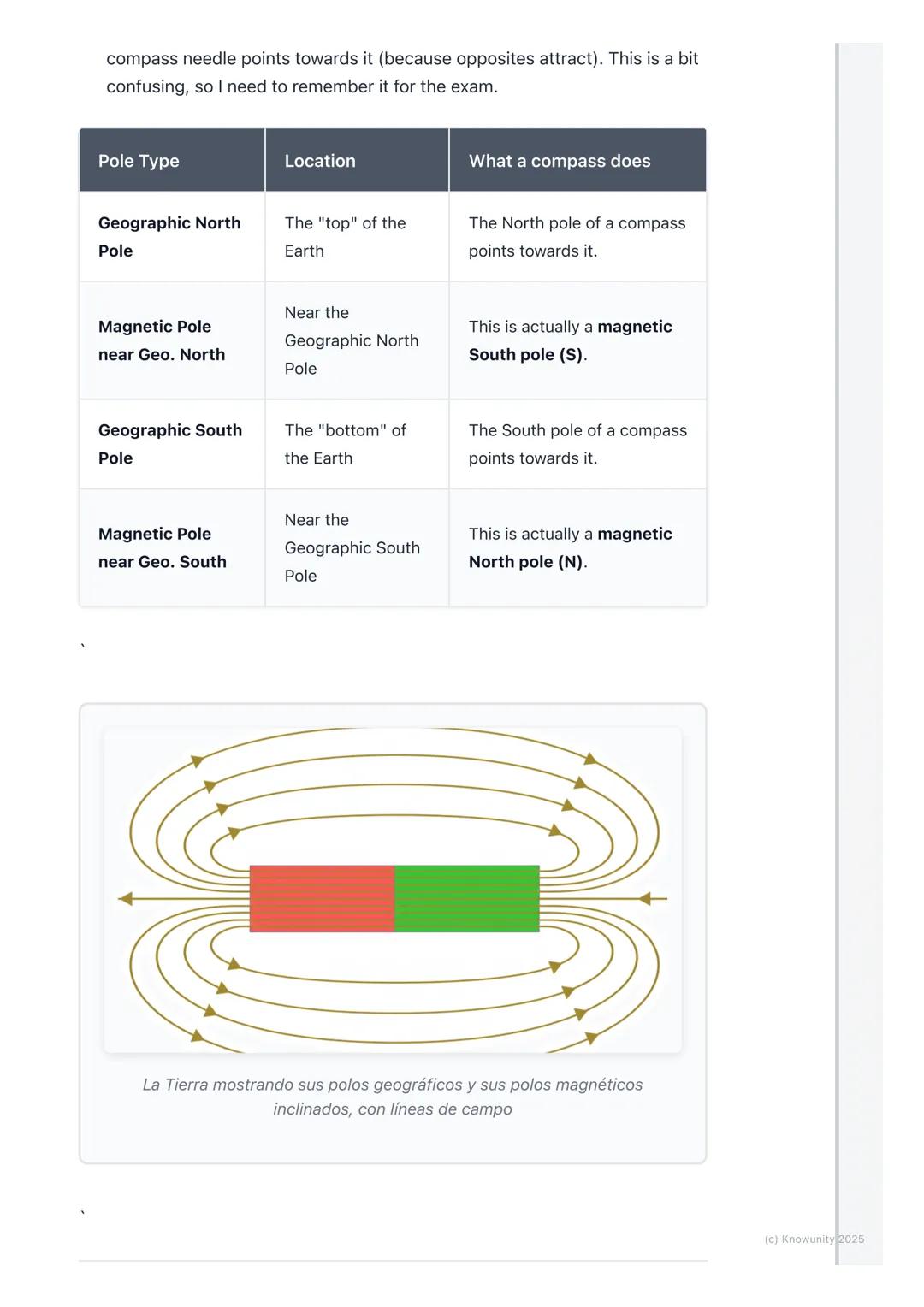
Real-World Applications You Need to Know
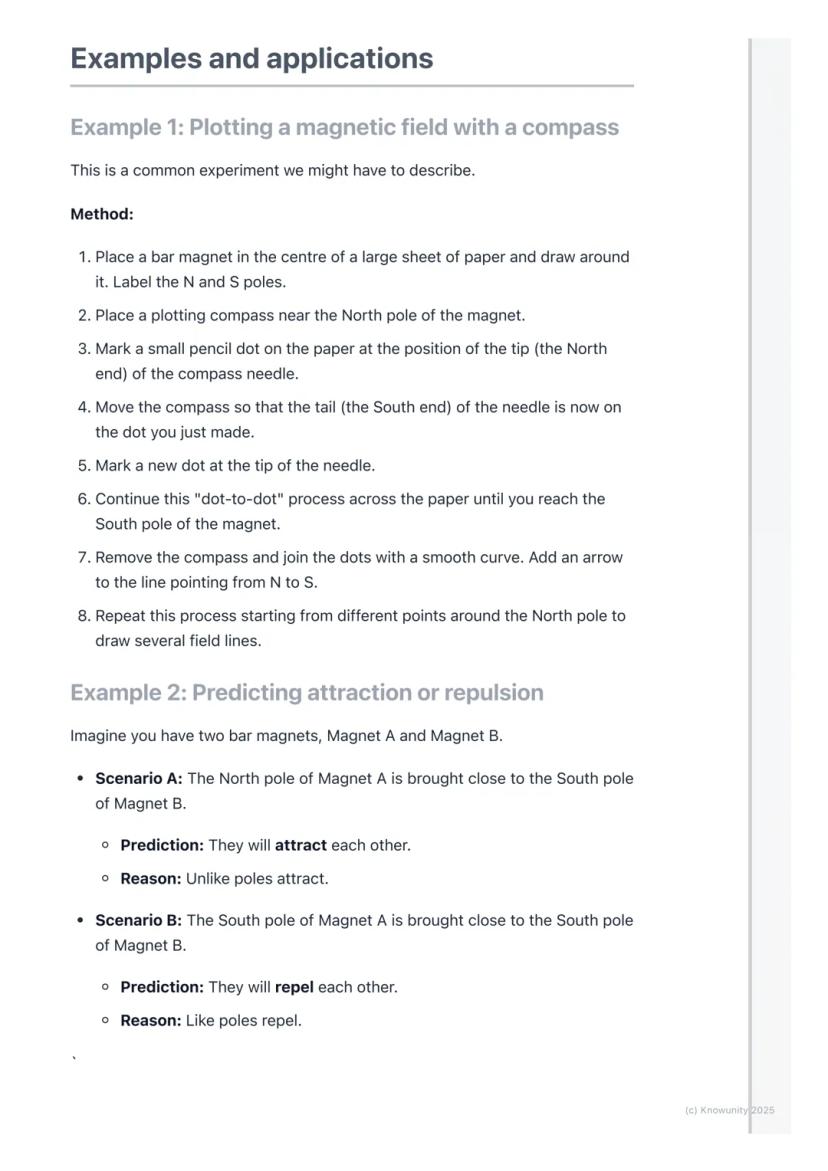
The compass plotting experiment is dead likely to appear in your exam. You place a plotting compass near a magnet's North pole, mark where the needle points, then move the compass so its tail sits on that mark. Keep going dot-to-dot until you reach the South pole, then join the dots with arrows pointing N to S.
Let's practice predicting what happens when magnets meet. If you bring the North pole of one magnet near the South pole of another, they'll attract because unlike poles attract. But bring two North poles together? They'll repel each other with surprising force.
The four magnetic materials - iron, steel, nickel, and cobalt - are essential to memorise. Steel makes brilliant permanent magnets because it holds its magnetism really well.
Pro tip: In field line drawings, always add arrows showing the N→S direction, and remember that poles are where lines are most crowded together!
5
of 7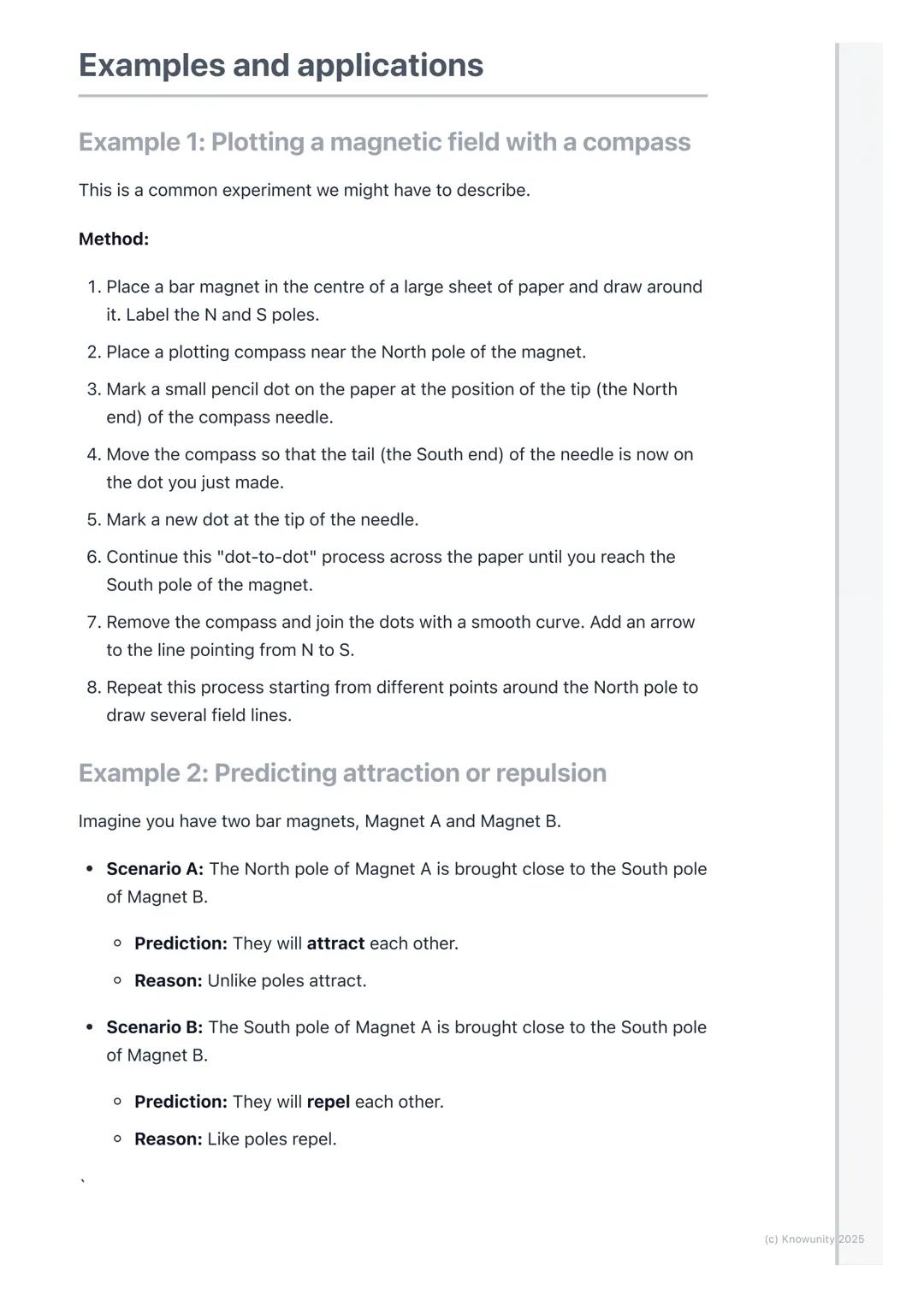
6
of 7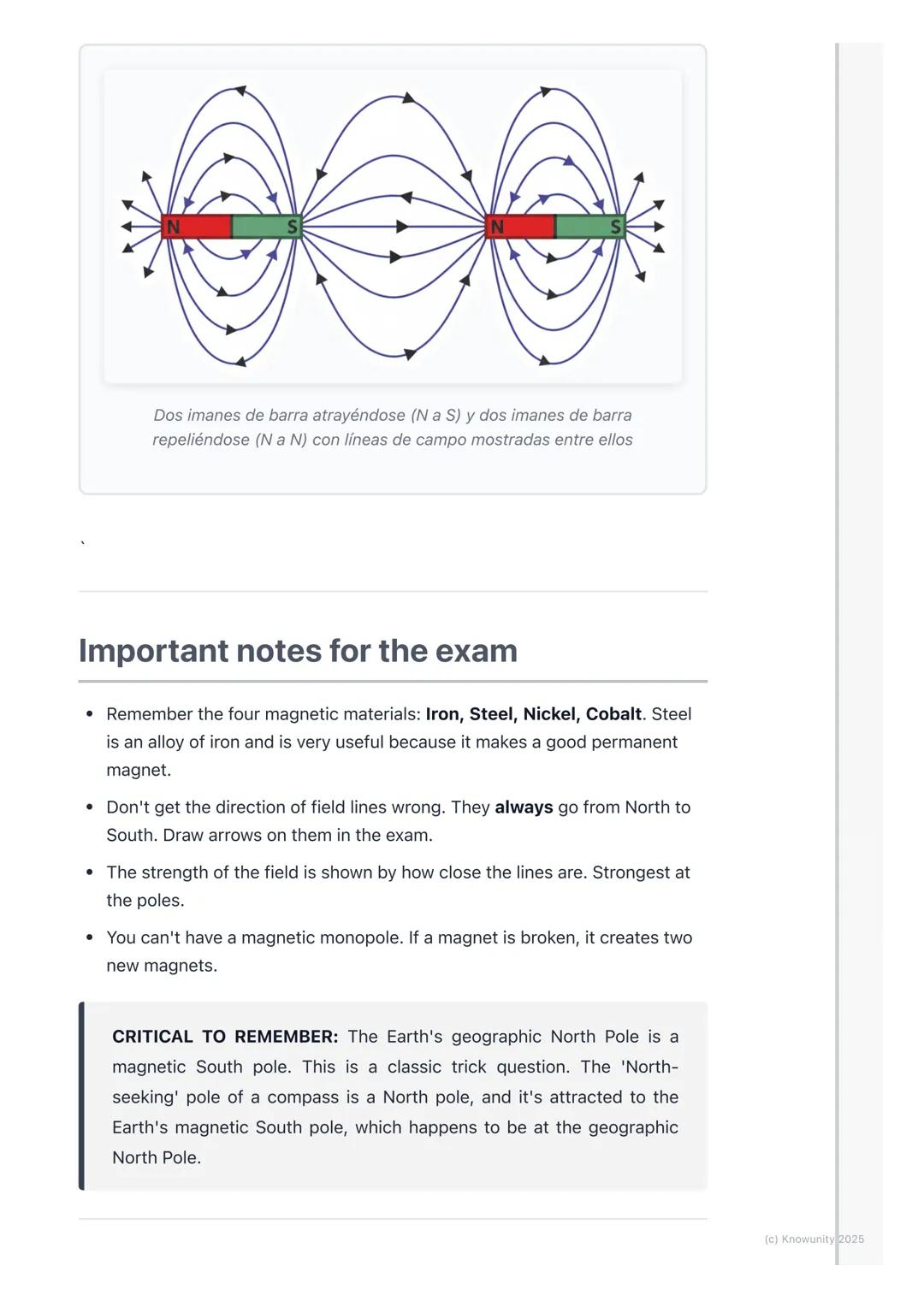
7
of 7
Pensamos que nunca lo preguntarías...
¿Qué es Knowunity AI companion?
Nuestro compañero de IA está específicamente adaptado a las necesidades de los estudiantes. Basándonos en los millones de contenidos que tenemos en la plataforma, podemos dar a los estudiantes respuestas realmente significativas y relevantes. Pero no se trata solo de respuestas, el compañero también guía a los estudiantes a través de sus retos de aprendizaje diarios, con planes de aprendizaje personalizados, cuestionarios o contenidos en el chat y una personalización del 100% basada en las habilidades y el desarrollo de los estudiantes.
¿Dónde puedo descargar la app Knowunity?
Puedes descargar la app en Google Play Store y Apple App Store.
¿Knowunity es totalmente gratuito?
Sí, tienes acceso gratuito a los contenidos de la aplicación y a nuestro compañero de IA. Para desbloquear determinadas funciones de la aplicación, puedes adquirir Knowunity Pro.
Contenidos más populares de Physics
3PhysicsBalanced and Unbalanced Forces
Students will explore how balanced forces result in no change in motion, while unbalanced forces cause an object to accelerate or change direction.
2nd Year421
PhysicsTypes of Forces
Students will identify common forces such as gravity (pulling objects down), friction (opposing motion), and air resistance (slowing objects in the air).
2nd Year460
PhysicsSpeed, Distance, and Time
Students will learn the basic concepts of speed, distance, and time, and how they relate to each other in describing motion.
2nd Year100
Contenidos más populares
9 Irish
IrishIrish oral questions and answers
Questions and answers for the leaving cert oral
5th Year4264
IrishIrish oral questions
Outline of oral questions
5th Year2055
 English
Key Quotes : Sive
Key Quotes and explanations: Sive
6th Year2822
IrishIníon- le hÁine Durkin
Aine Durkin’s poem, Iníon: Themes & summary
5th Year850
IrishIrish poetry 2027
Iníon + Dínit an Bhróin
5th Year1133
IrishLC HL notes- Iníon (poem)
Includes poem in English and Irish, theme, key words & phrases
5th Year2284
IrishGaeilge Grammar Office
All the basics you need to know on Irish grammar.
6th Year1063
EnglishCultural Context : Shawshank Redemption : Sive : Small Things Like These
Comparative Study : Cultural Context : Shawshank Redemption, Sive and Small Things Like These
6th Year1420
IrishAn Gaeilge Aiste
Irish Language essay
6th Year1320
¿No encuentras lo que buscas? Explora otros temas.
Mira lo que dicen nuestros usuarios. Les encanta - y a tí también.
4.6/5App Store
4.7/5Google Play
La app es muy fácil de usar y está muy bien diseñada. Hasta ahora he encontrado todo lo que estaba buscando y he podido aprender mucho de las presentaciones. Definitivamente utilizaré la aplicación para un examen de clase. Y, por supuesto, también me sirve mucho de inspiración.
Pablousuario de iOS
Esta app es realmente genial. Hay tantos apuntes de clase y ayuda [...]. Tengo problemas con matemáticas, por ejemplo, y la aplicación tiene muchas opciones de ayuda. Gracias a Knowunity, he mejorado en mates. Se la recomiendo a todo el mundo.
Elenausuaria de Android
Vaya, estoy realmente sorprendida. Acabo de probar la app porque la he visto anunciada muchas veces y me he quedado absolutamente alucinada. Esta app es LA AYUDA que quieres para el insti y, sobre todo, ofrece muchísimas cosas, como ejercicios y hojas informativas, que a mí personalmente me han sido MUY útiles.
Anausuaria de iOS
Physics1 visualizaciones·Actualizado May 31, 2026·7 páginasUnderstanding Magnets and Magnetic Fields
Ever wondered why your fridge door stays shut or how a compass knows which way is north? It's all down to magnetism - one of the most useful invisible forces in our world. Understanding magnets isn't just about sticking things... Mostrar más
1
of 7Inscríbete para ver los apuntes. ¡Es gratis!
- Acceso a todos los documentos
- Mejora tus notas
- Únete a millones de estudiantes
What Are Magnets and Magnetic Fields?
You're surrounded by magnets every day, from your phone's speakers to the motor in your washing machine. Magnets are objects that create an invisible force field around them, and this magnetic field can attract certain materials or push other magnets away.
The really important stuff to remember: magnets have two magnetic poles - a North pole (N) and a South pole (S) - where the magnetic force is strongest. Only four materials are naturally magnetic materials: iron, steel, nickel, and cobalt. Everything else like plastic, wood, or copper? Completely unaffected by magnets.
Magnetic field lines are how we draw the invisible field to see what's happening. Think of them as the paths that show where the magnetic force is acting and how strong it is.
Quick tip: Steel is just iron mixed with other elements, which is why it's magnetic too - perfect for making strong permanent magnets!
2
of 7Inscríbete para ver los apuntes. ¡Es gratis!
- Acceso a todos los documentos
- Mejora tus notas
- Únete a millones de estudiantes
The Golden Rules of Magnetism
Here's where magnetism gets predictable, and these rules will save you in every exam. Like poles repel (N pushes away N, S pushes away S) and unlike poles attract (N pulls towards S). It's that simple, but it explains everything magnets do.
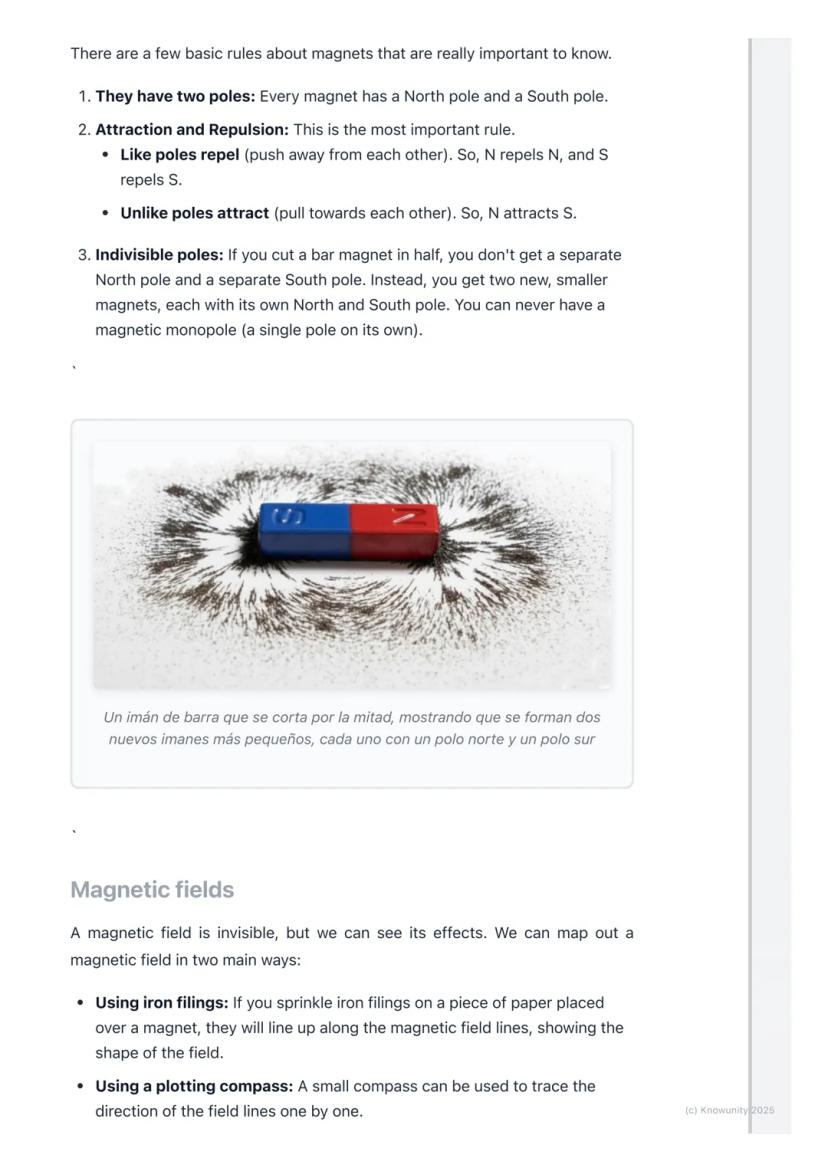
Here's something that might blow your mind: if you snap a bar magnet in half, you don't get separate N and S pieces. Instead, you get two complete magnets, each with their own North and South poles. You can never isolate a single pole on its own.
We can actually see magnetic fields by sprinkling iron filings around a magnet - they line up along the invisible field lines like magic. Alternatively, you can use a small compass to trace the field lines one by one.
Remember this: The closer together the field lines are drawn, the stronger the magnetic force is in that spot!
3
of 7Inscríbete para ver los apuntes. ¡Es gratis!
- Acceso a todos los documentos
- Mejora tus notas
- Únete a millones de estudiantes
Drawing Magnetic Fields Like a Pro
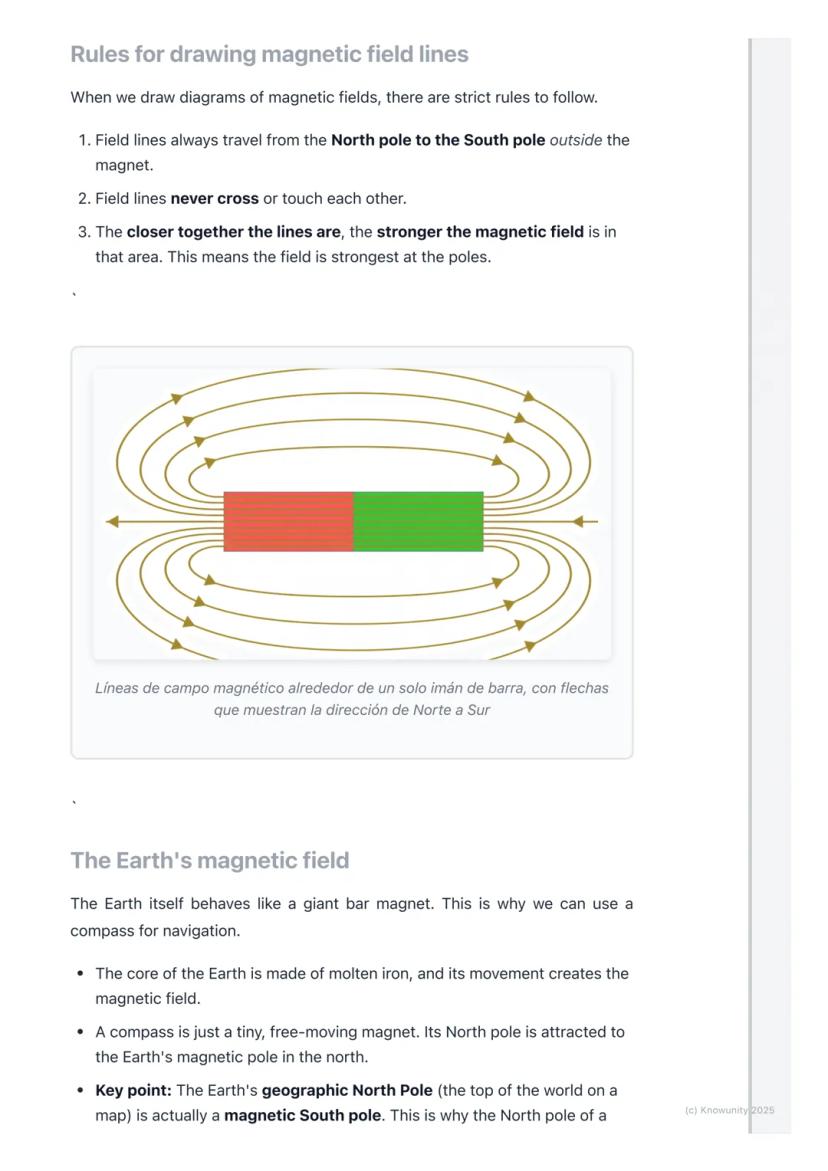
When you're sketching magnetic field diagrams, there are three non-negotiable rules. Field lines always travel from North to South outside the magnet, they never cross each other, and closer lines mean a stronger field.
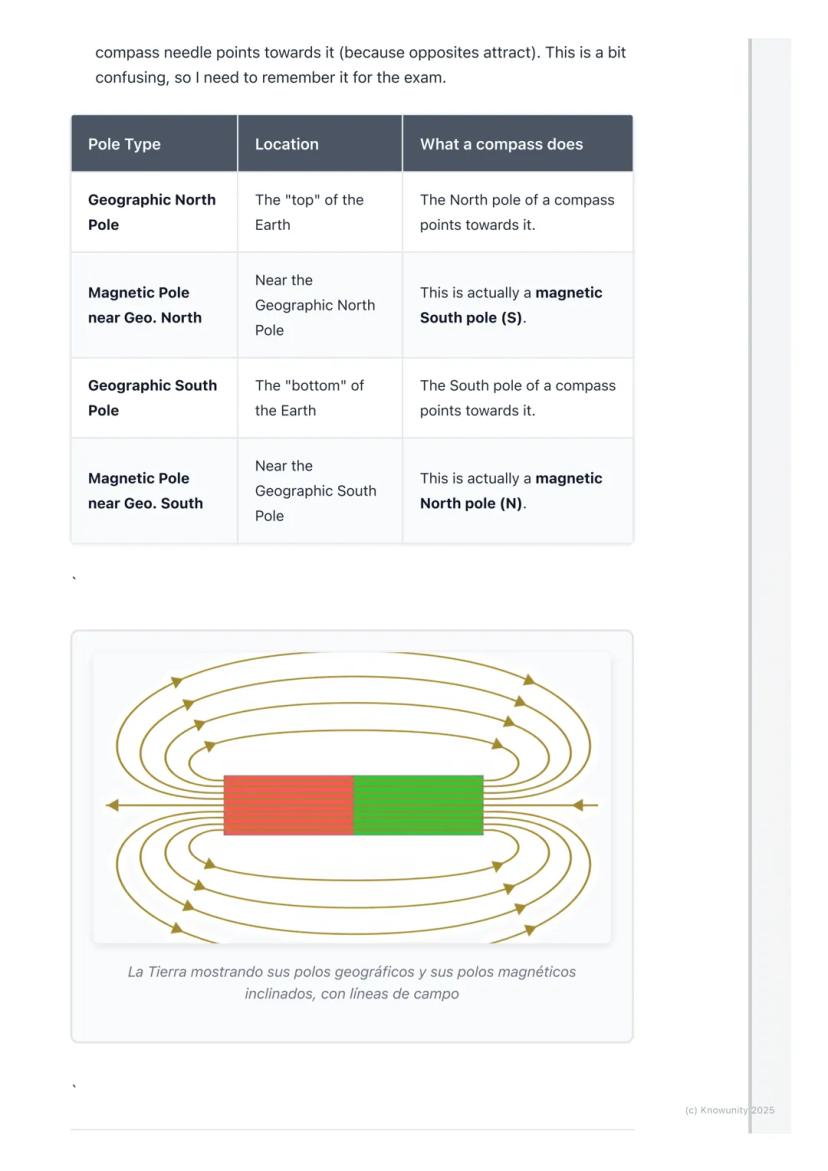
The Earth's magnetic field is basically our planet acting like a massive bar magnet. The molten iron core creates this field, which is why compasses work for navigation.
Here's the tricky bit that catches loads of students: Earth's geographic North Pole (the top on maps) is actually a magnetic South pole. That's why the North end of a compass needle points towards it - opposites attract, remember?
Exam alert: This Earth's pole confusion is a classic trick question - don't let it catch you out!
4
of 7Inscríbete para ver los apuntes. ¡Es gratis!
- Acceso a todos los documentos
- Mejora tus notas
- Únete a millones de estudiantes
Real-World Applications You Need to Know
The compass plotting experiment is dead likely to appear in your exam. You place a plotting compass near a magnet's North pole, mark where the needle points, then move the compass so its tail sits on that mark. Keep going dot-to-dot until you reach the South pole, then join the dots with arrows pointing N to S.
Let's practice predicting what happens when magnets meet. If you bring the North pole of one magnet near the South pole of another, they'll attract because unlike poles attract. But bring two North poles together? They'll repel each other with surprising force.
The four magnetic materials - iron, steel, nickel, and cobalt - are essential to memorise. Steel makes brilliant permanent magnets because it holds its magnetism really well.
Pro tip: In field line drawings, always add arrows showing the N→S direction, and remember that poles are where lines are most crowded together!
5
of 7Inscríbete para ver los apuntes. ¡Es gratis!
- Acceso a todos los documentos
- Mejora tus notas
- Únete a millones de estudiantes
6
of 7Inscríbete para ver los apuntes. ¡Es gratis!
- Acceso a todos los documentos
- Mejora tus notas
- Únete a millones de estudiantes
7
of 7Inscríbete para ver los apuntes. ¡Es gratis!
- Acceso a todos los documentos
- Mejora tus notas
- Únete a millones de estudiantes
Pensamos que nunca lo preguntarías...
¿Qué es Knowunity AI companion?
Nuestro compañero de IA está específicamente adaptado a las necesidades de los estudiantes. Basándonos en los millones de contenidos que tenemos en la plataforma, podemos dar a los estudiantes respuestas realmente significativas y relevantes. Pero no se trata solo de respuestas, el compañero también guía a los estudiantes a través de sus retos de aprendizaje diarios, con planes de aprendizaje personalizados, cuestionarios o contenidos en el chat y una personalización del 100% basada en las habilidades y el desarrollo de los estudiantes.
¿Dónde puedo descargar la app Knowunity?
Puedes descargar la app en Google Play Store y Apple App Store.
¿Knowunity es totalmente gratuito?
Sí, tienes acceso gratuito a los contenidos de la aplicación y a nuestro compañero de IA. Para desbloquear determinadas funciones de la aplicación, puedes adquirir Knowunity Pro.
Contenidos más populares de Physics
3PhysicsBalanced and Unbalanced Forces
Students will explore how balanced forces result in no change in motion, while unbalanced forces cause an object to accelerate or change direction.
2nd Year421
PhysicsTypes of Forces
Students will identify common forces such as gravity (pulling objects down), friction (opposing motion), and air resistance (slowing objects in the air).
2nd Year460
PhysicsSpeed, Distance, and Time
Students will learn the basic concepts of speed, distance, and time, and how they relate to each other in describing motion.
2nd Year100
Contenidos más populares
9IrishIrish oral questions and answers
Questions and answers for the leaving cert oral
5th Year4264
IrishIrish oral questions
Outline of oral questions
5th Year2055
EnglishKey Quotes : Sive
Key Quotes and explanations: Sive
6th Year2822
IrishIníon- le hÁine Durkin
Aine Durkin’s poem, Iníon: Themes & summary
5th Year850
IrishIrish poetry 2027
Iníon + Dínit an Bhróin
5th Year1133
IrishLC HL notes- Iníon (poem)
Includes poem in English and Irish, theme, key words & phrases
5th Year2284
IrishGaeilge Grammar Office
All the basics you need to know on Irish grammar.
6th Year1063
EnglishCultural Context : Shawshank Redemption : Sive : Small Things Like These
Comparative Study : Cultural Context : Shawshank Redemption, Sive and Small Things Like These
6th Year1420
IrishAn Gaeilge Aiste
Irish Language essay
6th Year1320
¿No encuentras lo que buscas? Explora otros temas.
Mira lo que dicen nuestros usuarios. Les encanta - y a tí también.
4.6/5App Store
4.7/5Google Play
La app es muy fácil de usar y está muy bien diseñada. Hasta ahora he encontrado todo lo que estaba buscando y he podido aprender mucho de las presentaciones. Definitivamente utilizaré la aplicación para un examen de clase. Y, por supuesto, también me sirve mucho de inspiración.
Pablousuario de iOS
Esta app es realmente genial. Hay tantos apuntes de clase y ayuda [...]. Tengo problemas con matemáticas, por ejemplo, y la aplicación tiene muchas opciones de ayuda. Gracias a Knowunity, he mejorado en mates. Se la recomiendo a todo el mundo.
Elenausuaria de Android
Vaya, estoy realmente sorprendida. Acabo de probar la app porque la he visto anunciada muchas veces y me he quedado absolutamente alucinada. Esta app es LA AYUDA que quieres para el insti y, sobre todo, ofrece muchísimas cosas, como ejercicios y hojas informativas, que a mí personalmente me han sido MUY útiles.
Anausuaria de iOS