
Ever wondered how oxygen gets from your lungs to your...
 Biology14 visualizaciones·Actualizado Jun 9, 2026·8 páginas
Understanding the Circulatory System: Heart and Blood Flow


1 / 8
1
of 8
What is the Circulatory System?
Think of the circulatory system as your body's motorway network - it's constantly moving essential supplies like oxygen and nutrients to every cell whilst taking away rubbish like carbon dioxide. Without this amazing transport system, your cells would starve and suffocate pretty quickly!
The system has three main parts working together: the heart (your body's engine), blood (the delivery truck), and blood vessels (the roads). The heart pumps blood through vessels to reach every corner of your body, from your brain to your big toe.
Blood itself is made up of different components, each with its own job. Plasma is the yellowish liquid that carries everything around - it's mostly water. Red blood cells contain a special protein called haemoglobin that grabs onto oxygen in your lungs, which is why blood looks red.
💡 Remember: A for Artery, A for Away - arteries always carry blood away from your heart!
2
of 8
Double Circulation - Why We're Special
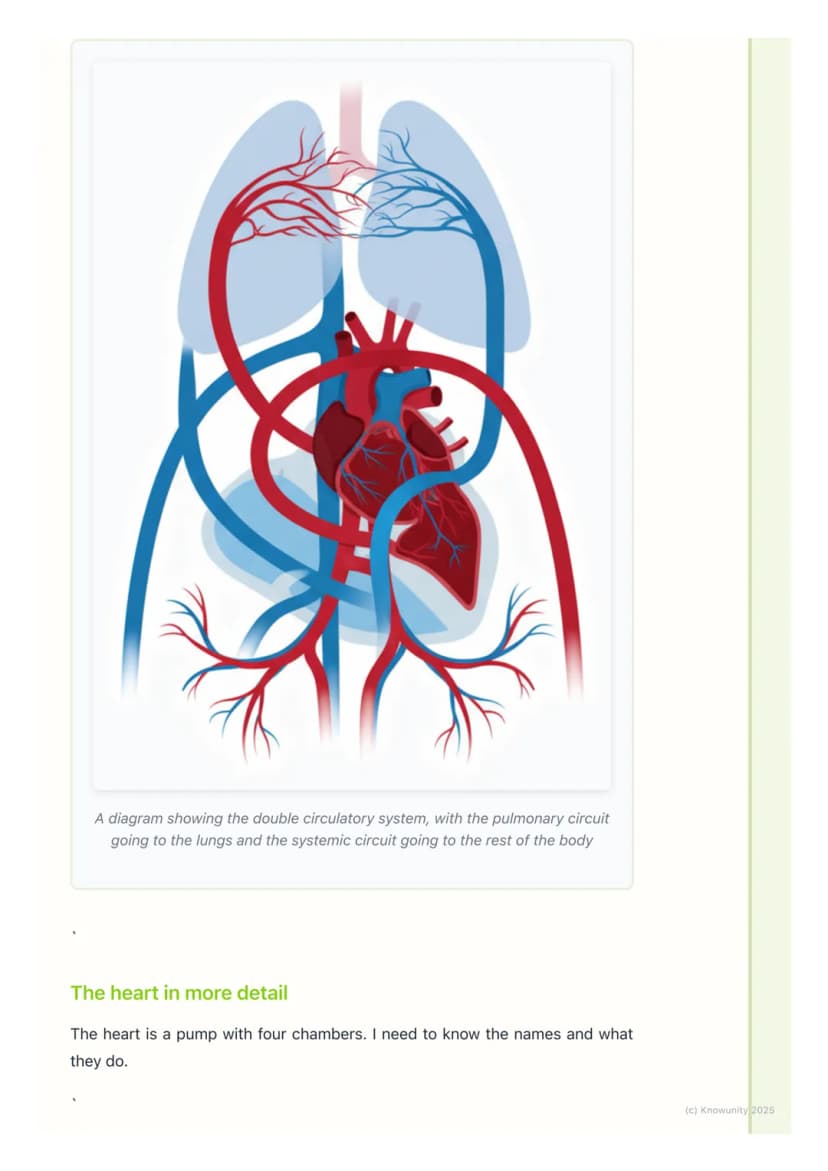
Humans have a double circulatory system, which basically means blood takes two separate journeys through your heart for each complete trip around your body. This makes us pretty efficient compared to other animals!
There are two circuits working simultaneously. The pulmonary circuit sends blood from your heart to your lungs and back again - 'pulmonary' just means anything to do with lungs. Meanwhile, the systemic circuit carries blood from your heart to everywhere else in your body and back.
This double system is brilliant because it means your blood gets properly oxygenated in your lungs before being pumped at high pressure to the rest of your body. It's like having two separate delivery routes that never get mixed up.
💡 Quick Tip: If you see 'pulmonary' in an exam question, it's always about the lungs!
3
of 8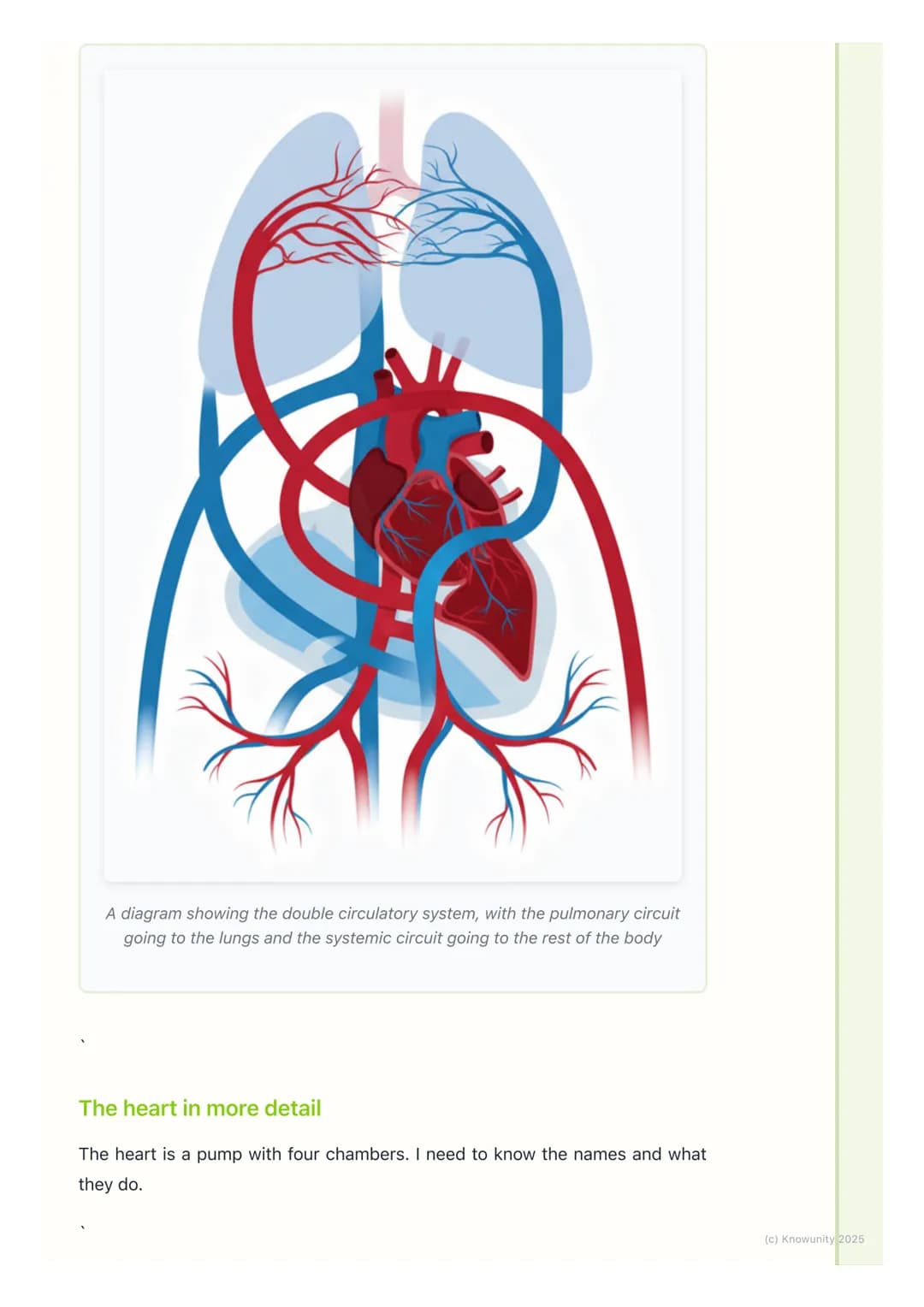
Heart Structure - Your Personal Pump
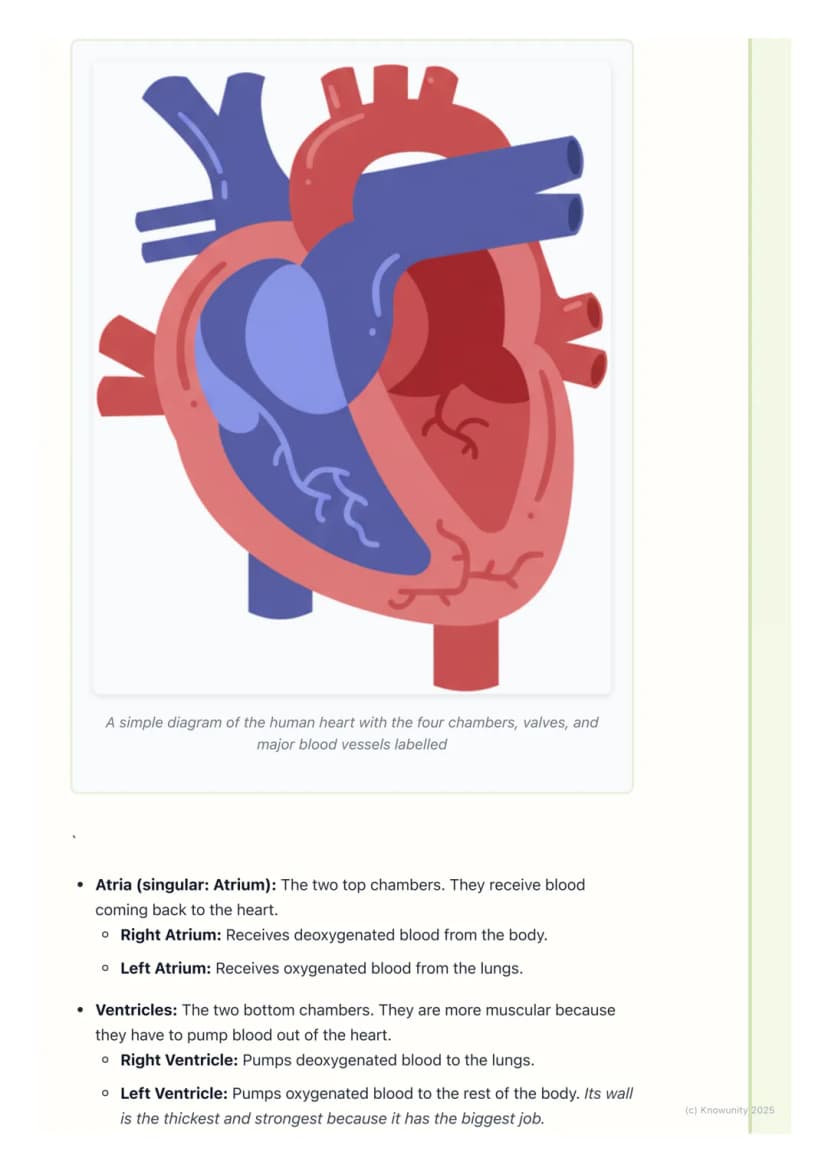
Your heart has four chambers, and knowing their names and jobs is essential for exams. The top two chambers are called atria (singular: atrium) - they're like reception areas that receive blood coming back to the heart.
The right atrium receives deoxygenated blood from your body, whilst the left atrium receives freshly oxygenated blood from your lungs. The bottom chambers are the ventricles, which are much more muscular because they have to pump blood out of the heart.
The left ventricle has the thickest, strongest wall because it has the biggest job - pumping oxygenated blood to your entire body. The right ventricle only needs to pump blood to your nearby lungs, so it doesn't need to be as powerful.
💡 Memory Trick: Ventricles are at the bottom and more Vigorous - they do the hard work of pumping!
4
of 8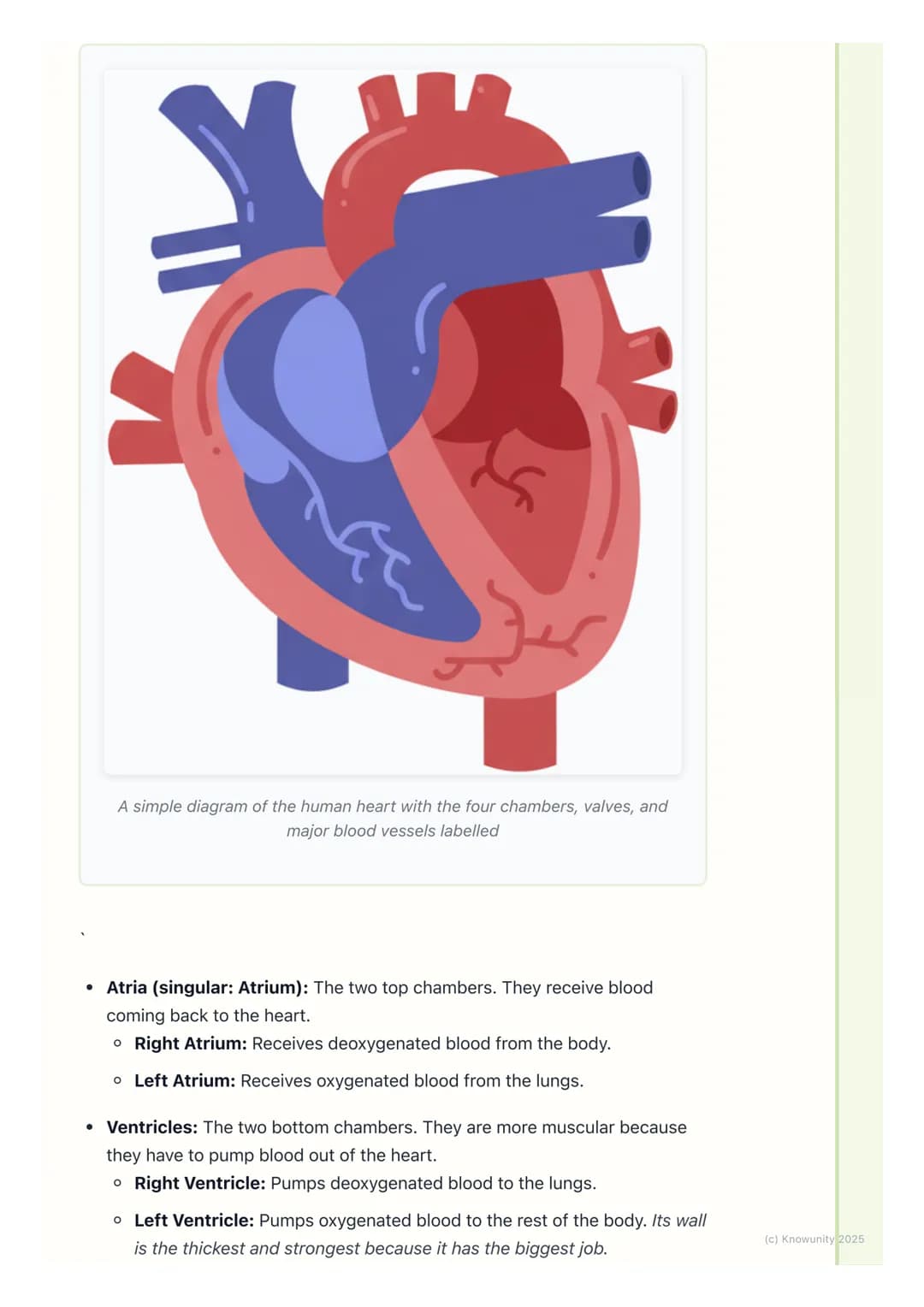
Blood Flow Path - Follow the Journey
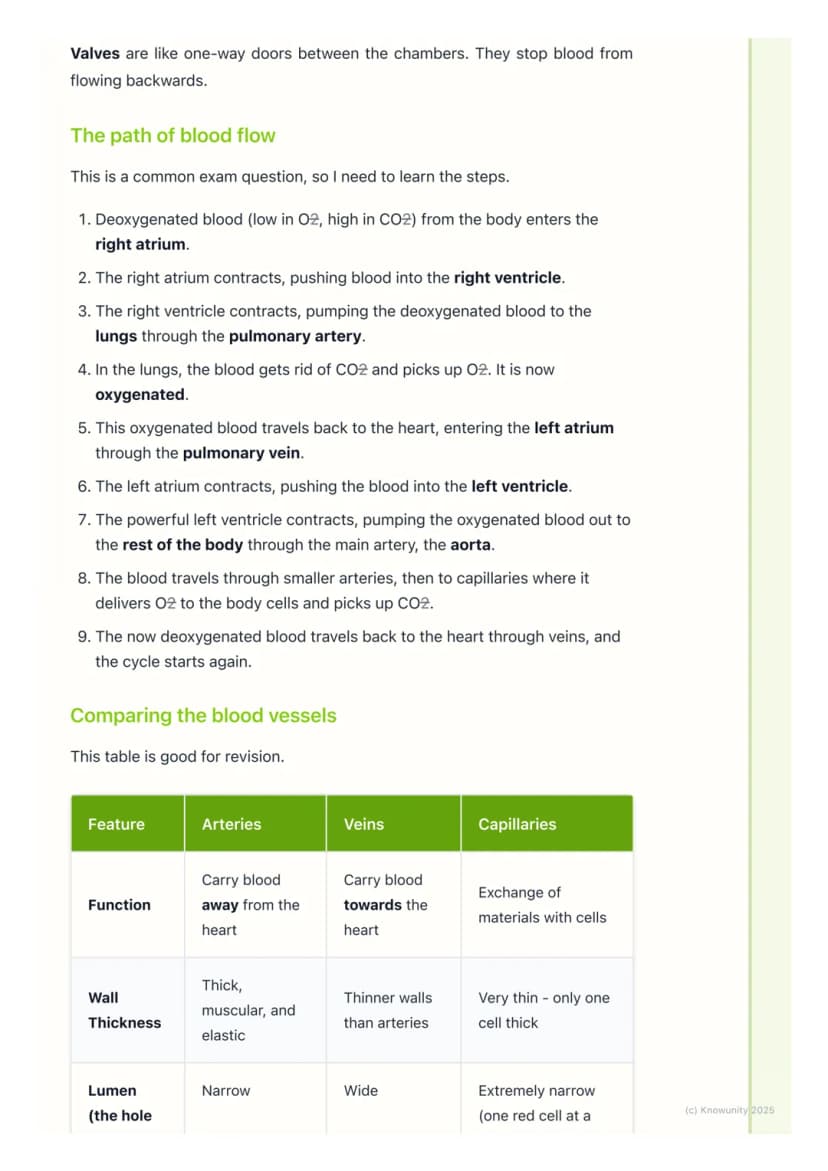
This is a favourite exam question, so you'll want to nail this sequence! Deoxygenated blood (low oxygen, high carbon dioxide) enters the right atrium from your body, then gets pushed into the right ventricle.
The right ventricle contracts and pumps this blood to your lungs through the pulmonary artery. In your lungs, the blood dumps its carbon dioxide and picks up fresh oxygen, becoming oxygenated blood. This oxygenated blood returns to your heart via the pulmonary vein.
The blood enters the left atrium, gets pushed into the powerful left ventricle, then gets pumped out to your entire body through the aorta (your main artery). After delivering oxygen to your cells and picking up carbon dioxide, the blood returns through veins to start the cycle again.
💡 Exam Alert: The pulmonary artery carries deoxygenated blood, and the pulmonary vein carries oxygenated blood - it's about direction, not blood type!
5
of 8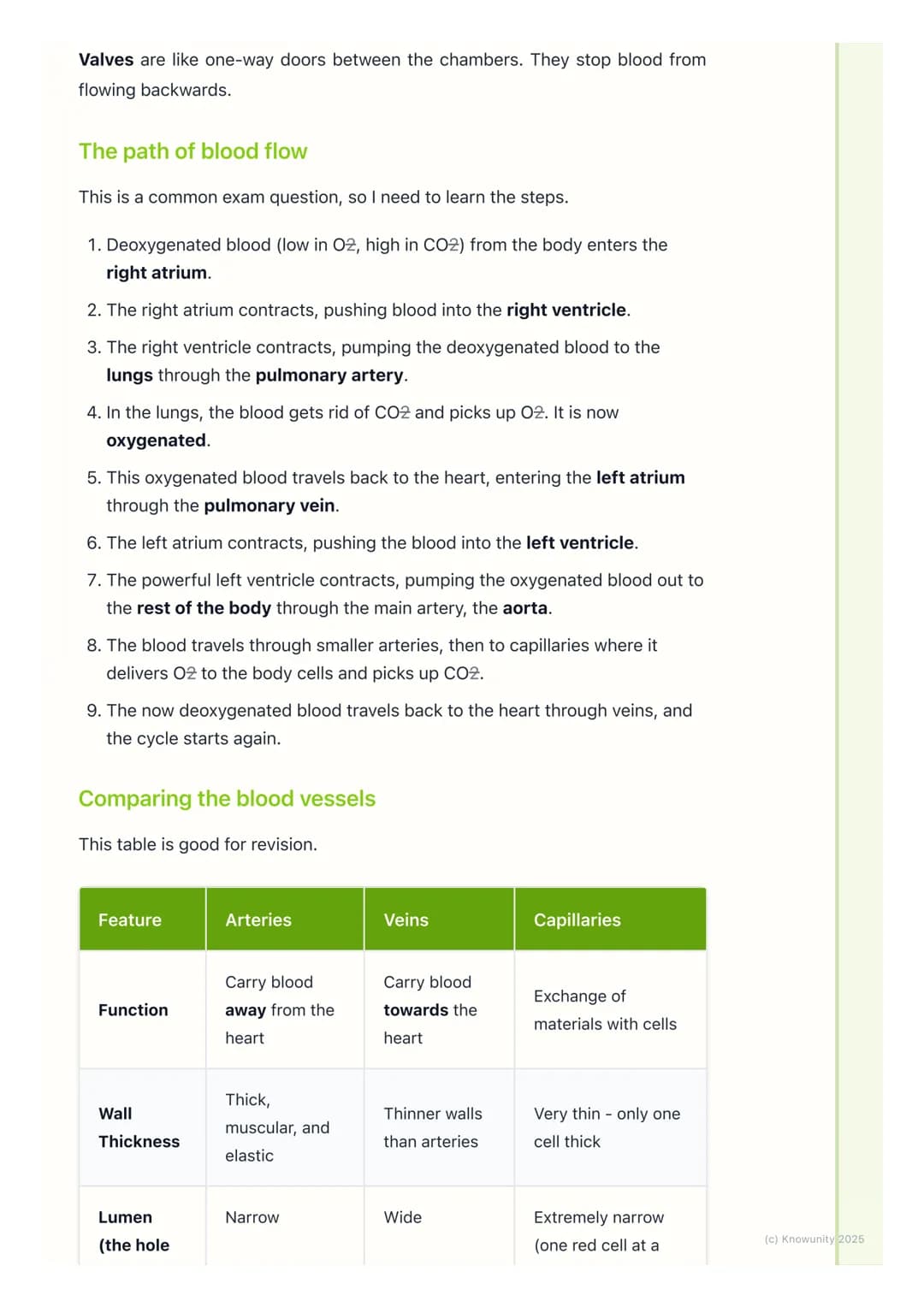
Blood Vessels - The Transport Network
Arteries, veins, and capillaries each have specific jobs and structures. Arteries carry blood away from your heart and have thick, muscular walls to handle high pressure - they're like motorways built to last.
Veins carry blood back towards your heart and have thinner walls with special valves to prevent blood flowing backwards. Think of these valves like one-way doors that keep traffic moving in the right direction.
Capillaries are where the magic happens - they're so tiny that only one red blood cell can squeeze through at a time. Their walls are just one cell thick, making it super easy for oxygen and nutrients to pass through to your body's cells.
💡 Key Point: Capillaries are one cell thick for a reason - any thicker and oxygen couldn't get through efficiently!
6
of 8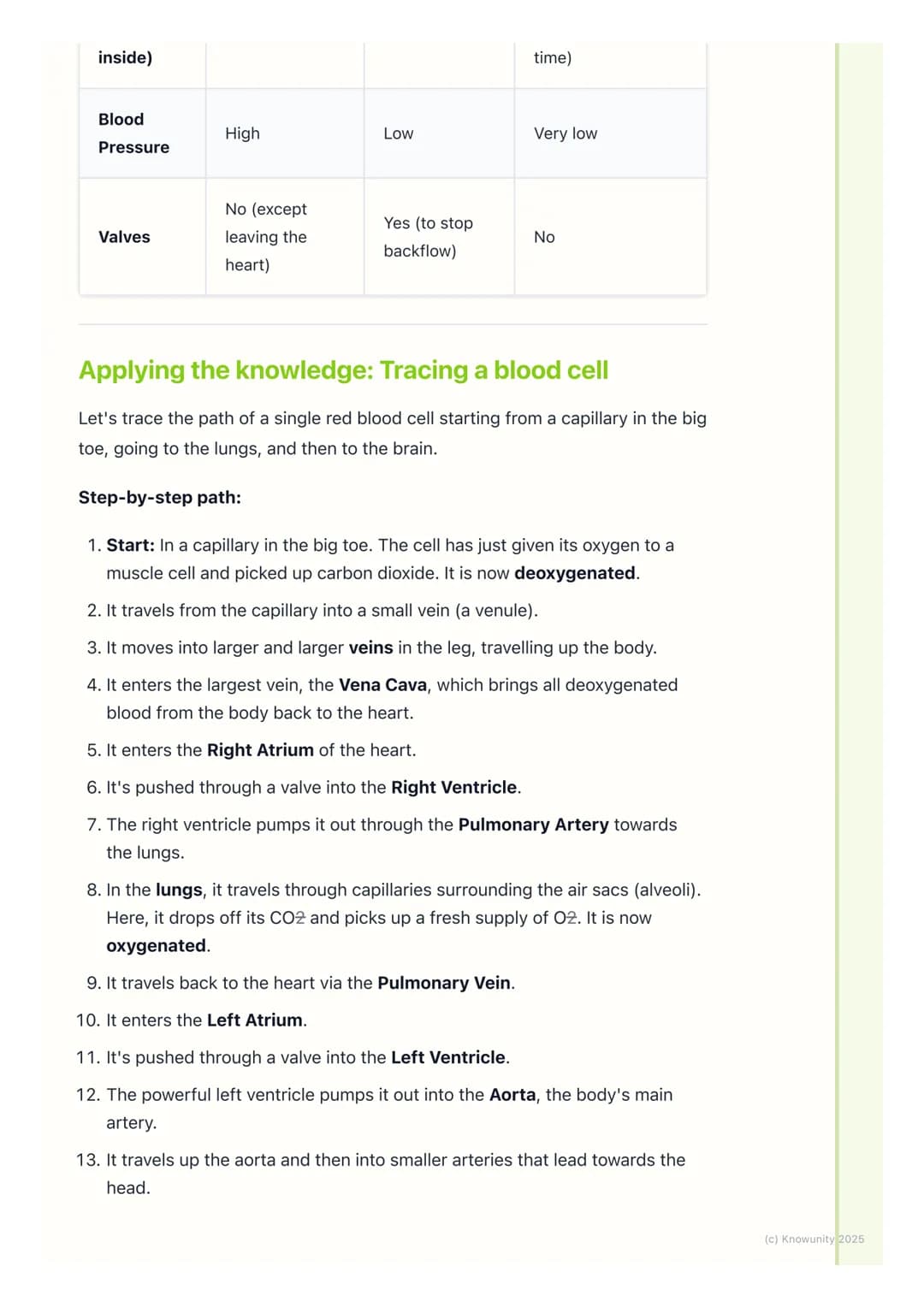
Tracing a Blood Cell Journey
Let's follow a single red blood cell on an epic journey from your big toe to your brain! Starting in a toe capillary after delivering oxygen, our cell is now deoxygenated and travels through small veins, then larger veins, eventually reaching the massive vena cava.
From the vena cava, it enters the right atrium, gets pushed into the right ventricle, then pumped through the pulmonary artery to the lungs. In the lung capillaries, it swaps its carbon dioxide for fresh oxygen around the alveoli (air sacs).
Now oxygenated, it returns via the pulmonary vein to the left atrium, gets pushed into the left ventricle, then pumped out through the aorta. Finally, it travels up towards the head and enters a brain capillary to deliver its precious oxygen cargo.
💡 Visualise: Imagine you're the red blood cell - this journey happens in less than a minute!
7
of 8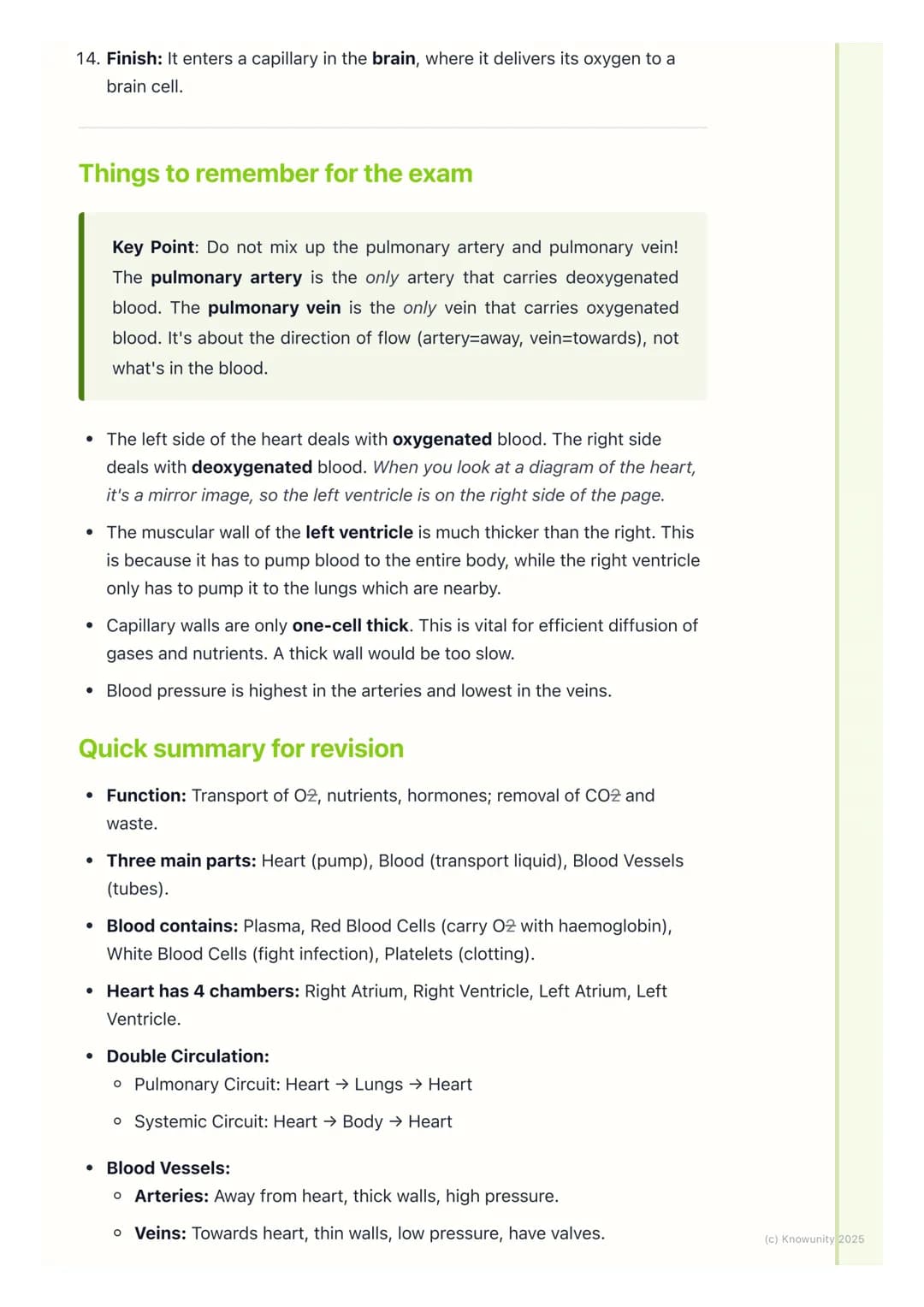
Key Points for Exam Success
Remember that the left side of the heart always deals with oxygenated blood, whilst the right side handles deoxygenated blood. When looking at heart diagrams, remember they're mirror images - the left ventricle appears on the right side of the page!
The left ventricle wall is much thicker than the right because it needs to pump blood around your entire body, not just to your nearby lungs. Blood pressure is highest in arteries (they need strong walls) and lowest in veins (they need valves instead).
Don't forget that white blood cells fight infections, platelets help blood clot when you're injured, and haemoglobin in red blood cells is what actually carries the oxygen. These components work together perfectly to keep you alive and healthy.
💡 Exam Success: Practice drawing the blood flow path - it's often worth loads of marks and shows you really understand the system!
8
of 8
Quick Revision Summary
Your circulatory system has one main job: transport oxygen, nutrients, and hormones to cells whilst removing carbon dioxide and waste products. The heart pumps, blood carries, and vessels provide the pathways for this incredible delivery service.
The double circulation means blood visits your heart twice per complete journey - once to collect oxygen from lungs, once to deliver it to your body. This efficient system keeps you alive every second of every day without you even thinking about it!
💡 Final Tip: Make sure you can label a heart diagram and trace blood flow - these are exam essentials that will boost your marks!
Pensamos que nunca lo preguntarías...
¿Qué es Knowunity AI companion?
Nuestro compañero de IA está específicamente adaptado a las necesidades de los estudiantes. Basándonos en los millones de contenidos que tenemos en la plataforma, podemos dar a los estudiantes respuestas realmente significativas y relevantes. Pero no se trata solo de respuestas, el compañero también guía a los estudiantes a través de sus retos de aprendizaje diarios, con planes de aprendizaje personalizados, cuestionarios o contenidos en el chat y una personalización del 100% basada en las habilidades y el desarrollo de los estudiantes.
¿Dónde puedo descargar la app Knowunity?
Puedes descargar la app en Google Play Store y Apple App Store.
¿Knowunity es totalmente gratuito?
Sí, tienes acceso gratuito a los contenidos de la aplicación y a nuestro compañero de IA. Para desbloquear determinadas funciones de la aplicación, puedes adquirir Knowunity Pro.
Contenidos más populares de Biology
7Contenidos más populares
9¿No encuentras lo que buscas? Explora otros temas.
Mira lo que dicen nuestros usuarios. Les encanta - y a tí también.
4.6/5App Store
4.7/5Google Play
La app es muy fácil de usar y está muy bien diseñada. Hasta ahora he encontrado todo lo que estaba buscando y he podido aprender mucho de las presentaciones. Definitivamente utilizaré la aplicación para un examen de clase. Y, por supuesto, también me sirve mucho de inspiración.
Pablousuario de iOS
Esta app es realmente genial. Hay tantos apuntes de clase y ayuda [...]. Tengo problemas con matemáticas, por ejemplo, y la aplicación tiene muchas opciones de ayuda. Gracias a Knowunity, he mejorado en mates. Se la recomiendo a todo el mundo.
Elenausuaria de Android
Vaya, estoy realmente sorprendida. Acabo de probar la app porque la he visto anunciada muchas veces y me he quedado absolutamente alucinada. Esta app es LA AYUDA que quieres para el insti y, sobre todo, ofrece muchísimas cosas, como ejercicios y hojas informativas, que a mí personalmente me han sido MUY útiles.
Anausuaria de iOS
Biology14 visualizaciones·Actualizado Jun 9, 2026·8 páginasUnderstanding the Circulatory System: Heart and Blood Flow
Ever wondered how oxygen gets from your lungs to your muscles when you're running? The circulatory system is basically your body's delivery service, constantly transporting everything your cells need to survive whilst collecting their waste products.
1
of 8
Inscríbete para ver los apuntes. ¡Es gratis!
- Acceso a todos los documentos
- Mejora tus notas
- Únete a millones de estudiantes
What is the Circulatory System?
Think of the circulatory system as your body's motorway network - it's constantly moving essential supplies like oxygen and nutrients to every cell whilst taking away rubbish like carbon dioxide. Without this amazing transport system, your cells would starve and suffocate pretty quickly!
The system has three main parts working together: the heart (your body's engine), blood (the delivery truck), and blood vessels (the roads). The heart pumps blood through vessels to reach every corner of your body, from your brain to your big toe.
Blood itself is made up of different components, each with its own job. Plasma is the yellowish liquid that carries everything around - it's mostly water. Red blood cells contain a special protein called haemoglobin that grabs onto oxygen in your lungs, which is why blood looks red.
💡 Remember: A for Artery, A for Away - arteries always carry blood away from your heart!
2
of 8Inscríbete para ver los apuntes. ¡Es gratis!
- Acceso a todos los documentos
- Mejora tus notas
- Únete a millones de estudiantes
Double Circulation - Why We're Special
Humans have a double circulatory system, which basically means blood takes two separate journeys through your heart for each complete trip around your body. This makes us pretty efficient compared to other animals!
There are two circuits working simultaneously. The pulmonary circuit sends blood from your heart to your lungs and back again - 'pulmonary' just means anything to do with lungs. Meanwhile, the systemic circuit carries blood from your heart to everywhere else in your body and back.
This double system is brilliant because it means your blood gets properly oxygenated in your lungs before being pumped at high pressure to the rest of your body. It's like having two separate delivery routes that never get mixed up.
💡 Quick Tip: If you see 'pulmonary' in an exam question, it's always about the lungs!
3
of 8Inscríbete para ver los apuntes. ¡Es gratis!
- Acceso a todos los documentos
- Mejora tus notas
- Únete a millones de estudiantes
Heart Structure - Your Personal Pump
Your heart has four chambers, and knowing their names and jobs is essential for exams. The top two chambers are called atria (singular: atrium) - they're like reception areas that receive blood coming back to the heart.
The right atrium receives deoxygenated blood from your body, whilst the left atrium receives freshly oxygenated blood from your lungs. The bottom chambers are the ventricles, which are much more muscular because they have to pump blood out of the heart.
The left ventricle has the thickest, strongest wall because it has the biggest job - pumping oxygenated blood to your entire body. The right ventricle only needs to pump blood to your nearby lungs, so it doesn't need to be as powerful.
💡 Memory Trick: Ventricles are at the bottom and more Vigorous - they do the hard work of pumping!
4
of 8Inscríbete para ver los apuntes. ¡Es gratis!
- Acceso a todos los documentos
- Mejora tus notas
- Únete a millones de estudiantes
Blood Flow Path - Follow the Journey
This is a favourite exam question, so you'll want to nail this sequence! Deoxygenated blood (low oxygen, high carbon dioxide) enters the right atrium from your body, then gets pushed into the right ventricle.
The right ventricle contracts and pumps this blood to your lungs through the pulmonary artery. In your lungs, the blood dumps its carbon dioxide and picks up fresh oxygen, becoming oxygenated blood. This oxygenated blood returns to your heart via the pulmonary vein.
The blood enters the left atrium, gets pushed into the powerful left ventricle, then gets pumped out to your entire body through the aorta (your main artery). After delivering oxygen to your cells and picking up carbon dioxide, the blood returns through veins to start the cycle again.
💡 Exam Alert: The pulmonary artery carries deoxygenated blood, and the pulmonary vein carries oxygenated blood - it's about direction, not blood type!
5
of 8Inscríbete para ver los apuntes. ¡Es gratis!
- Acceso a todos los documentos
- Mejora tus notas
- Únete a millones de estudiantes
Blood Vessels - The Transport Network
Arteries, veins, and capillaries each have specific jobs and structures. Arteries carry blood away from your heart and have thick, muscular walls to handle high pressure - they're like motorways built to last.
Veins carry blood back towards your heart and have thinner walls with special valves to prevent blood flowing backwards. Think of these valves like one-way doors that keep traffic moving in the right direction.
Capillaries are where the magic happens - they're so tiny that only one red blood cell can squeeze through at a time. Their walls are just one cell thick, making it super easy for oxygen and nutrients to pass through to your body's cells.
💡 Key Point: Capillaries are one cell thick for a reason - any thicker and oxygen couldn't get through efficiently!
6
of 8Inscríbete para ver los apuntes. ¡Es gratis!
- Acceso a todos los documentos
- Mejora tus notas
- Únete a millones de estudiantes
Tracing a Blood Cell Journey
Let's follow a single red blood cell on an epic journey from your big toe to your brain! Starting in a toe capillary after delivering oxygen, our cell is now deoxygenated and travels through small veins, then larger veins, eventually reaching the massive vena cava.
From the vena cava, it enters the right atrium, gets pushed into the right ventricle, then pumped through the pulmonary artery to the lungs. In the lung capillaries, it swaps its carbon dioxide for fresh oxygen around the alveoli (air sacs).
Now oxygenated, it returns via the pulmonary vein to the left atrium, gets pushed into the left ventricle, then pumped out through the aorta. Finally, it travels up towards the head and enters a brain capillary to deliver its precious oxygen cargo.
💡 Visualise: Imagine you're the red blood cell - this journey happens in less than a minute!
7
of 8Inscríbete para ver los apuntes. ¡Es gratis!
- Acceso a todos los documentos
- Mejora tus notas
- Únete a millones de estudiantes
Key Points for Exam Success
Remember that the left side of the heart always deals with oxygenated blood, whilst the right side handles deoxygenated blood. When looking at heart diagrams, remember they're mirror images - the left ventricle appears on the right side of the page!
The left ventricle wall is much thicker than the right because it needs to pump blood around your entire body, not just to your nearby lungs. Blood pressure is highest in arteries (they need strong walls) and lowest in veins (they need valves instead).
Don't forget that white blood cells fight infections, platelets help blood clot when you're injured, and haemoglobin in red blood cells is what actually carries the oxygen. These components work together perfectly to keep you alive and healthy.
💡 Exam Success: Practice drawing the blood flow path - it's often worth loads of marks and shows you really understand the system!
8
of 8Inscríbete para ver los apuntes. ¡Es gratis!
- Acceso a todos los documentos
- Mejora tus notas
- Únete a millones de estudiantes
Quick Revision Summary
Your circulatory system has one main job: transport oxygen, nutrients, and hormones to cells whilst removing carbon dioxide and waste products. The heart pumps, blood carries, and vessels provide the pathways for this incredible delivery service.
The double circulation means blood visits your heart twice per complete journey - once to collect oxygen from lungs, once to deliver it to your body. This efficient system keeps you alive every second of every day without you even thinking about it!
💡 Final Tip: Make sure you can label a heart diagram and trace blood flow - these are exam essentials that will boost your marks!
Pensamos que nunca lo preguntarías...
¿Qué es Knowunity AI companion?
Nuestro compañero de IA está específicamente adaptado a las necesidades de los estudiantes. Basándonos en los millones de contenidos que tenemos en la plataforma, podemos dar a los estudiantes respuestas realmente significativas y relevantes. Pero no se trata solo de respuestas, el compañero también guía a los estudiantes a través de sus retos de aprendizaje diarios, con planes de aprendizaje personalizados, cuestionarios o contenidos en el chat y una personalización del 100% basada en las habilidades y el desarrollo de los estudiantes.
¿Dónde puedo descargar la app Knowunity?
Puedes descargar la app en Google Play Store y Apple App Store.
¿Knowunity es totalmente gratuito?
Sí, tienes acceso gratuito a los contenidos de la aplicación y a nuestro compañero de IA. Para desbloquear determinadas funciones de la aplicación, puedes adquirir Knowunity Pro.
Contenidos más populares de Biology
7Contenidos más populares
9¿No encuentras lo que buscas? Explora otros temas.
Mira lo que dicen nuestros usuarios. Les encanta - y a tí también.
4.6/5App Store
4.7/5Google Play
La app es muy fácil de usar y está muy bien diseñada. Hasta ahora he encontrado todo lo que estaba buscando y he podido aprender mucho de las presentaciones. Definitivamente utilizaré la aplicación para un examen de clase. Y, por supuesto, también me sirve mucho de inspiración.
Pablousuario de iOS
Esta app es realmente genial. Hay tantos apuntes de clase y ayuda [...]. Tengo problemas con matemáticas, por ejemplo, y la aplicación tiene muchas opciones de ayuda. Gracias a Knowunity, he mejorado en mates. Se la recomiendo a todo el mundo.
Elenausuaria de Android
Vaya, estoy realmente sorprendida. Acabo de probar la app porque la he visto anunciada muchas veces y me he quedado absolutamente alucinada. Esta app es LA AYUDA que quieres para el insti y, sobre todo, ofrece muchísimas cosas, como ejercicios y hojas informativas, que a mí personalmente me han sido MUY útiles.
Anausuaria de iOS